-
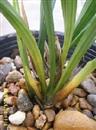
Integrated Pest and Disease Management Methods for Chinese Orchids
For orchids, rot diseases are extremely serious and spread rapidly. Orchid rot diseases mainly consist of two types: soft rot and black rot. In the early stages of soft rot, tiny brown water-soaked spots appear on the leaves, which then expand into dark moist patches; at this point the lesions rupture very easily and exude a foul-smelling...
-

Courtyard Cultivation Methods and Technical Key Points for Chinese Orchids
Many orchid growers use courtyards as orchid sites for orchid cultivation. The advantage is that it is close to the ecological environment of the orchid's native habitat, which is beneficial to the growth and development of the orchid plants. The disadvantage is that light, temperature, moisture, and wind force are not easy to control, and the plants are prone to natural disasters, pests, and diseases, which to a certain extent restricts the growth of the orchid plants. Therefore, the following key problems must be solved with emphasis: Light. Orchids are semi-shade plants. They cannot do without sunlight, but strong sunlight is also harmful. In winter and spring they need full light, while in summer and autumn strong direct light must be blocked. If the courtyard faces south, move the orchid plants to the front of the house in winter and spring, and to the foot of the south wall in summer and autumn. If it faces north, move them to the foot of the north wall in winter and spring, and to the front of the door in summer and autumn. In summer and autumn, shade nets must be used for shading, and the shading degree should be no less than 70%. If conditions permit, climbing plants such as grapes, loofah, and chayote can also be planted in the courtyard in summer, which can both shade and cool the orchids and provide fresh melons and fruits for eating.
-
What causes blackened leaf tips and root rot in Chinese orchids (Cymbidium)?
1. Excessive temperature and direct sunlight easily scorch the leaf tips. 2. The potting medium is too rich and stays wet without drying out; in mild cases this causes poor root development and blocked nutrient uptake, making the leaf tips prone to blackening, and in severe cases it causes root rot and death of the orchid plant. 3. Pests. There is a pest similar to aphids that congregates in the potting soil and lives on the orchid roots; it is very small and usually hard to spot, and although its direct damage is not great, it easily infects the orchid roots with disease, causing root rot.
-
What are the precautions for potting Chinese orchids?
Before potting a Chinese orchid, prepare a fertile, loose, slightly acidic growing medium. Generally use black mountain soil; before use, first put it in the sun to dry, to prevent moss and disease, then store it in a dry place for later use. For the pot, generally use a fired clay pot with good drainage and aeration, with a pot diameter of about 20 cm. The time for potting or repotting is generally in March to April or October to November. Place 5 to 6 pieces of broken pot shards at the bottom of the pot, and put in some pieces of broken wood, to help drainage and aeration. Then, carefully remove the old soil from the orchid roots, wash the roots with water, and
-
What is anthracnose in Chinese orchids? Let us learn about this disease
Anthracnose in Chinese orchids affects orchids of the genus Cymbidium such as Spring Orchid (Cymbidium goeringii), Faber's Cymbidium (Cymbidium faberi), Four-season Orchid (Cymbidium ensifolium), Chinese Cymbidium (Cymbidium sinense), and Cold Orchid (Cymbidium kanran), causing scorched black spots on leaves and fruits, and in severe cases the entire leaf dies. Symptoms: In the early stage of the disease, round or oval red-brown spots appear in the middle of the leaf, and semicircular ones at the leaf margin. When they occur at the leaf base, large spots or a large number of them can also cause the entire leaf to die. In the later stage, the center of the spot becomes lighter in color, and the upper ring splits longitudinally. Spots on fruits are irregular, appearing as elongated dark brown patches. Pathogen: The disease is caused by several species of fungi. According to isolation and culture by the Shanghai Institute of Landscape Science,
-
What are the control methods for Fusarium wilt in Chinese orchids?
Symptoms: Fusarium wilt is a serious disease of Cymbidium plants. Severely affected plants die within a few weeks, while ordinary diseased plants can survive for one year or longer. The above-ground symptoms of Fusarium wilt are similar to those of root rot caused by Rhizoctonia solani Kuhn, namely leaves turning yellow and wilting, pseudobulbs becoming thin and twisted, and ultimately root rot. However, Fusarium causes a bulbous purplish-red coloration, and eventually the rhizome is also affected and turns purplish-red. When the disease is severe, the pseudobulbs undergo deep rot. Onset
条件筛选