-
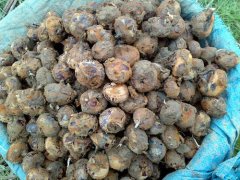
What Plant Is the Chinese Water Chestnut? Cultivation Methods and Nutritional Facts
Two plants are called water chestnut plants: Eleocharis dulcis and Trapa natans. One is generally considered invasive, while the other can be cultivated and eaten in many Asian dishes and stir-fries. Water chestnut facts Trapa natans, sometimes called Jesuit Nut or W
-

How many years does it take for a Chinese chestnut tree to bear fruit?
The Chinese scientific name of the Chinese chestnut is Pingpo (Sterculia monosperma), native to China, India, Vietnam, Indonesia and other places, so how many years does it take for a Chinese chestnut to bear fruit? 1. Growth habits of the Chinese chestnut. The Chinese chestnut is an evergreen tree of the Sterculiaceae family and the Sterculia genus. Its seeds are edible, and when roasted they taste like chestnuts.
-
The Pathogenesis and Control Methods of Water Chestnut Stem Blight
Water chestnut, also known as Chinese water chestnut, water chestnut, shao, fuci, wuyu, puji, dili, belongs to the monocotyledonous Cyperaceae family, is a perennial root herbaceous plant, oblate, pointed at the top, smooth and glossy surface, purplish-red or dark brown, grows in ponds and marshes, with dark green
-
How should water chestnuts (Chinese water chestnuts) be stored and kept fresh after harvest?
Water chestnuts are grown all over China and can be eaten raw or cooked. Moreover, the cultivation technique for water chestnuts is relatively simple, they have strong growth capacity and high yield, and sometimes after harvest they cannot all be sold on the market, so they need to be stored, otherwise they rot very easily and affect the planting returns. So
-
How to Grow Chinese Water Chestnut (Eleocharis dulcis): Cultivating the "Underground Snow Pear" This Way
The Chinese water chestnut, also known as the horse's hoof, water chestnut, or spiny turtle, is both a fruit and a vegetable, crisp and delicious. So, what are the methods for growing Chinese water chestnut? Let's find out together! 1. Site selection. The Chinese water chestnut is not demanding about soil and can adapt to various soil environments.
-
What are the benefits and effects of chestnuts (Chinese chestnuts)? Is it better to eat them raw or cooked? Who should not eat them?
It's chestnut season again, and the streets and alleys are filled with the fragrant smell of roasted chestnuts. Chestnuts can be eaten boiled, roasted, stir-fried and in many other ways. Besides being delicious, chestnuts also have good medicinal value. So what are the benefits and effects of chestnuts? Is it better to eat them raw or cooked
-
What to do when the fruiting position of Chinese chestnut shifts outward? The latest solution
Chinese chestnut has the habit of bearing fruit on strong shoots, and strong shoots are generally located on the outer periphery of the canopy, so fruiting occurs on the periphery. Young trees have very few fruiting shoots and low yields. As adult trees increase their branching, the branches become progressively thinner and eventually lose the ability to bear fruit. So for Chinese chestnut
-
A Detailed Guide to the Latest Key Points for Water Chestnut Cultivation
The water chestnut is also called the Chinese water chestnut (Eleocharis dulcis). It is an aquatic herbaceous plant that can be harvested for many years. It is often eaten as a fruit, but it can also be used as a vegetable. It is deeply loved by everyone, but the only rather troublesome thing is peeling it, so a sales model of buying and peeling on the spot has appeared on the market.
-
The Latest Technical Guide to Post-Harvest Management of Chinese Chestnut
Chinese chestnut (Castanea mollissima) is grown in every region of our country. Many growers, after harvesting, pay no attention to the chestnut trees and fail to manage them in time, which leads to a serious decline in chestnut yields the following year. This is because the chestnut begins flower bud differentiation before it is even harvested, and after harvesting the tree lacks nutrients
-
Detailed Explanation of the Latest High-Yield Fertilization Techniques for Chinese Chestnut
Chinese chestnut is mostly planted in mountainous and hilly areas and has strong adaptability, but its management is relatively extensive. When the Chinese chestnut blooms and bears fruit, it needs a large amount of nutrients for growth, and if nutrients are insufficient, it will lead to a high rate of empty burs, affecting yield and quality and reducing returns
条件筛选