-

Grain circulation needs both strict oversight and the removal of barriers
Grain circulation needs both strict oversight and the removal of "fences"
-
Grain circulation enters a painful transition period, and industry transformation faces a test
Grain circulation enters a "painful transition period"
-
Weekly Agricultural Science and Technology Achievement Recommendations (Great Agriculture Circle Issue 4)
Great Agriculture Circle: Weekly Agricultural Science and Technology Achievement Recommendations (Issue 4)
-
How Earthworms Activate a Green Circular Planting and Breeding Chain
Letting Small Earthworms Activate a Green Circular Planting and Breeding Chain
-
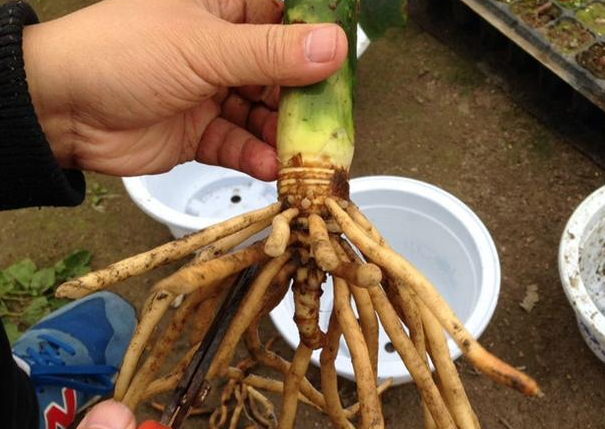
Under what circumstances does the clivia (Clivia miniata) grow side shoots, and what to do about root rot
When it comes to this clivia (Clivia miniata), many people absolutely love growing it. Under what circumstances does this clivia produce offsets? What to do about clivia root rot: 1. After removing it from the pot, first wash the roots clean, disinfect thoroughly, and soak in potassium permanganate solution. 2. Repot, using plain soil or pine needles to encourage rooting. 3. After potting
-
Straw Grows Small Mushrooms: A New Technology for Circular Agriculture
In the rice-producing areas of the south, the technology of rapid straw decomposition and return to the field is promoted; in the dry-farming agricultural areas of the north, the technology of straw bio-reaction carbon fertilizer utilization is the focus of promotion; in the key corn and wheat producing areas, the technologies of straw crushing and return to the field, straw silage for feed, and straw forming, solidification and gasification for fuel are promoted, achieving a fundamental shift from "storing grain in granaries" to "storing grain in the land." In Nannihe Village, Zhaoxian County, the village is not large, but it has already developed more than 200 button mushroom (Agaricus bisporus) sheds. Each mushroom shed can convert and utilize the straw produced from 20 mu of land and more than 3,000 kg of dry livestock and poultry manure, producing more than 2
-
Detailed Explanation of New Technology for Circular Pig and Chicken Rearing
With the arrival of the era of low profits in animal husbandry, raising only one type of livestock or poultry often fails to yield good returns due to various reasons such as market and cost factors. The new technology of efficient circular pig and chicken rearing is a practical technique particularly suitable for rural farmers. It is introduced as follows: Use lactic acid fermentation of chicken manure to feed pigs. There are many methods for feeding chicken manure to pigs, such as the sun-drying method, fresh-feeding method, and conventional fermentation method, but it is best to use lactic acid-fermented chicken manure. This is because this method can turn chicken manure into high-quality pig feed with good palatability. The fermentation method is: first
-
Complete Guide to Porcine Circovirus Prevention and Treatment, a Must-Read for Pig Farmers
Porcine circovirus infection is an immunosuppressive infectious disease caused by PCV-II, characterized by post-weaning multisystemic wasting syndrome and dermatitis and nephropathy syndrome. Its main manifestations include physical decline, emaciation, pallor, diarrhea, and the formation of red-purple spots on the skin. The disease was first reported by Canadian scholars in 1991, and in recent years it has occurred in many countries and regions around the world. In China, the disease was first reported in 2000, and at present, in areas of China with @#@227@#@ high pig-raising density and on farms with poorer feeding management, the occurrence of this disease is becoming increasingly widespread, and the harm to the pig industry is becoming increasingly serious.
-
Research Progress on Detection Technologies for Porcine Circovirus
Porcine circovirus disease is a class of viral infectious diseases caused by porcine circovirus (PCV) infection and characterized by immunosuppression, with the main clinical manifestation being postweaning multisystemic wasting syndrome in piglets caused by PCV-2. This article reviews the research progress in recent years, both domestically and internationally, on detection technologies for this virus, including virus isolation, electron microscopy, polymerase chain reaction, indirect immunofluorescence assay, immunohistochemistry, enzyme-linked immunosorbent assay, and in situ nucleic acid hybridization. Porcine circovirus disease
-
How to prevent and control porcine circovirus type 2 infection
To date, there are still no effective measures to control and eliminate other diseases caused by porcine circovirus type 2 infection, nor are there any truly effective commercial vaccines or drugs available to protect against porcine circovirus type 2 infection. Moreover, porcine circovirus type 2 is highly resistant to conventional disinfectants, which creates difficulties for purification work on pig farms. At present, comprehensive control measures should be adopted. 1. Change and improve raising methods, achieve all-in/all-out production at each stage of pig farming, and avoid mixing pigs of different ages in the same group
条件筛选