-

Guangxi Takes the Lead in Breeding an Aromatic Red Rice CMS Line
Recently, the Science and Technology Department of Guangxi Autonomous Region organized relevant experts to conduct a field technical appraisal of the wild-abortive type CMS line Betel Nut Red A, bred by the Xiangzhou Huang Family Rice Research Institute. After rigorous field investigation and indoor microscopic examination, and after hearing the breeder's technical report and questions and answers, the expert group determined that Betel Nut Red A meets the standards for a rice CMS line. It is the first aromatic red rice CMS line bred in China, with strong innovation. Betel Nut Red A has stable agronomic traits, stable male sterility, good flowering habits, relatively good grain quality, and a resistance level of highly susceptible.
-
Breeding and Cultivation Points of the High-Starch Potato Variety Qingshu No. 2
The new high-starch potato variety Qingshu No. 2 was bred by the Crop Institute of the Qinghai Academy of Agriculture and Forestry Sciences. This variety is a late-maturing variety with a growth period of about 120 days, good agronomic traits, strong growth vigor, strong disease resistance, and excellent quality; its starch content is 22.86%-25.83%, which is 7-10 percentage points higher than the average value of the 77 nationally approved varieties (15.05%), and its Vc content is 20.92mg/100g; it tastes good and has a high yield level, with an average yield of 3000kg per mu and a maximum yield of 4192kg per mu; it has wide adaptability
-
Which dog breeds are not suitable for home breeding
Among the many pet dogs, some breeds are very prone to dystocia (difficult birth) when breeding. The more purebred the dog, the greater the chance of dystocia; small breeds such as the Poodle, Dachshund, Shih Tzu, Spanish Spaniel, and Chihuahua are especially prone to dystocia. Because these dogs have been artificially modified, their bones have become smaller and their pelvic cavity narrower, so dystocia is relatively easy to occur. In addition, some dogs such as the English Bulldog and the Italian Mastiff (Neapolitan Mastiff) also frequently experience dystocia because their heads are relatively large. Home-kept dogs are prone to dystocia
-
Key Technical Points for Feeding and Management of Does During the Breeding Period
The purpose of raising female sika deer is to require does to have high fertility, a healthy constitution, and to produce superior offspring. Whether does can produce superior offspring is not only related to the breed of the doe, but also extremely closely related to feeding and management. Only good feeding and management can enable does to give full play to their superior production performance. According to the nutritional needs and feeding and management characteristics of does at different stages, doe feeding and management can be divided into three periods, described as follows: I. Feeding and Management of Does During the Mating Period Every year
-
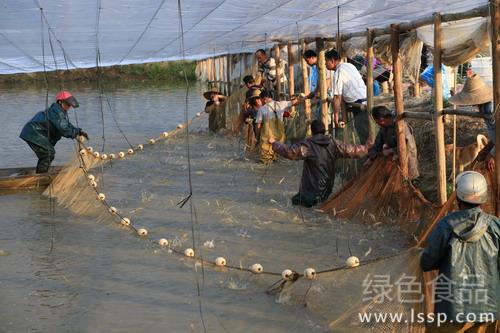
Artificial breeding methods for freshwater shrimp: water quality cultivation is key
Artificial breeding methods for freshwater shrimp: water quality cultivation is key
-
How to Carry Out Selective Breeding and Breed Conservation in Jian Carp Farming
Any superior breed, if selective breeding and breed conservation are neglected, will often lead to breed degradation, reduced yield and deterioration of other traits. Jian carp has stable genetic traits and can, through within-breed reproduction, pass the superior traits of this breed on to its offspring. However, different carp breeds easily interbreed and become mixed, individuals within the same breed also differ, and the living environment can have a considerable effect on the traits of a breed. Therefore, attention must be paid to selective breeding of superior stock: according to the breed's standards, fish with good traits in all relevant respects should be selected as broodstock for rearing and allowed to reproduce.
-
Detailed Explanation of Natural Breeding Methods and Technical Key Points for Koi
Selecting excellent broodstock is the key to successful koi breeding. To use natural breeding, the first step is to select broodstock that meet the standards. In the north, koi previously kept as breeding stock are moved to outdoor ponds in mid-to-late March after spending the winter indoors. At this time, broodstock should be further carefully selected to obtain excellent offspring. (1) Selection of broodstock: Broodstock used for breeding should generally have the following: a strong physique, bright and crystalline coloration, pure lineage, distinct breed characteristics, clearly defined color patch margins with no blurred edges, no blemishes, smooth and neat scales,
-
Detailed Explanation of Key Points for Freshwater Shrimp Breeding Technology in Crab Ponds
The freshwater shrimp, scientifically named Macrobrachium nipponense, is also known as the Oriental river prawn. The artificial breeding technology for freshwater shrimp fry is as follows: 1. Selection and keeping of parent shrimp. Parent shrimp selected for artificial breeding are required to have a standard body shape, pure body color, be plump and healthy, free from disease and injury, and have well-developed gonads. Female shrimp should have a body length of over 6 cm, and male shrimp should be somewhat larger. They can be selected from large shrimp caught in the wild or from artificially cultured ponds. The selected parent shrimp must be kept in a dedicated pond. The parent shrimp pond should have an area of 1-3 mu and a water depth of about 1 m. Parent shrimp
-
Detailed Explanation of Key Techniques for Broodstock Breeding in Icefish Aquaculture
1. Source of broodstock. Sexually mature individuals caught during the breeding season of large icefish can be used for artificial breeding; individuals raised to sexual maturity can be used for artificial breeding; individuals that have not reached sexual maturity must not be used for artificial breeding. 2. Capture of broodstock. The capture of large icefish should be carried out during the peak spawning period; in areas north of the Yellow River, capture can begin in early December, and in areas south of the Yellow River, capture can begin in mid-December. The capture nets can be gill nets (mesh size 2a of 1.5-2.4 cm) or under-ice seine nets.
-
How to Select Breeding Softshell Turtles? Master the Selection Techniques to Choose High-Quality Breeding Softshell Turtles
Breeding softshell turtles refers to softshell turtles used for reproduction. Under natural conditions, due to the influence of climate and the harm caused by natural enemies, softshell turtles not only grow and develop slowly, but also have a low survival rate. In addition, after years of indiscriminate hunting and capture, wild resources are almost on the verge of extinction. Therefore, using artificial methods to intensify the cultivation of breeding softshell turtles is the main key to solving the source of softshell turtle seed and developing softshell turtle farming production. The selection of breeding softshell turtles should pay attention to the following issues. 1. Age: In the Jiangsu area, generally female and male softshell turtles aged over 3 years, that is, weighing more than 0.25 kg, will engage in mating behavior,
条件筛选