-

What is the most suitable body weight for snakes used for breeding
Like other poultry and livestock, snakes that are too heavy or too light in body weight cannot be used for breeding. Snakes used for breeding must be in their youth, and the same species also has specific weight limits, so as to ensure the quality of the breeding snakes. Generally speaking, the body weight specifications of breeding snakes must be controlled as follows: small snake species about 100-150 g each; medium snake species 150-350 g each; large snake species about 250-700 g each. Those that are too large or too small cannot be included in the range of breeding snakes.
-
Successful breeding of new edible mushroom varieties
Recently, the golden pholiota mushroom cultivation trial carried out by the Hengxian Economic Crop Workstation was successful. Edible mushroom cultivation is one of the pillar industries of agriculture in Hengxian. In 2005, the county's edible mushroom cultivation area was 8.9 million sq m, with a total output of 39,663 tons and sales revenue of 144 million yuan. It was rated by the Agriculture Department of the autonomous region as "Guangxi's largest county for edible mushrooms" and was honored with the "2005 Guangxi Agricultural Emerging Advantage Industry Development Award" issued by the autonomous region government. In order to break through the situation of a single variety in the edible mushroom industry, the relevant departments of Hengxian
-
Construction of High-Yield Schisandra Orchards and Seedling Selection and Breeding Techniques
Terrain conditions: Different terrains have a considerable impact on cultivated Schisandra. Under natural conditions, Schisandra is mainly distributed on shaded forest edges and open woodlands in mountainous areas, growing naturally with extremely low yields. Through artificial cultivation and 5 years of observational practice, it has been proven that more than 10 hours of all-day sunlight, an open field of view, no major obstacles around, good ventilation and light penetration, access to water, drainage capability, and a soil layer of 50 cm constitute the optimal location. Water source conditions: Schisandra is relatively drought-tolerant. To obtain higher yields and ensure good plant growth, strengthen rapid division of growth cells
-
China's pioneer in cotton marker breeding was initiated by Lu 05H9
Recently, the new red-flower-marked insect-resistant hybrid cotton variety Lu 05H9, bred by the Cotton Center of the Shandong Academy of Agricultural Sciences, passed the approval of the National Crop Variety Approval Committee. The red flower marker is like putting an anti-counterfeiting label on transgenic insect-resistant hybrid cotton. This variety pioneered red-flower trait marker breeding in cotton in China, and it is also the first of its kind worldwide. According to researcher Wang Liuming, the breeder of the variety, Lu 05H9 red-flower-marked insect-resistant cotton was developed over 12 years through distant hybridization, transferring the HB red-flower trait of wild G. bickii cotton onto cultivated
-
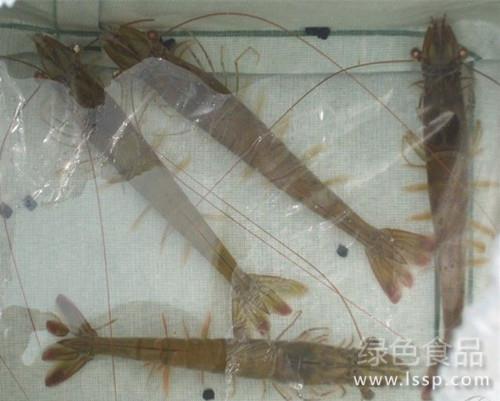
8 key points for the safe overwintering of broodstock shrimp: raise them well and get high breeding returns
Raise broodstock shrimp well for high breeding returns: 8 key points for safe overwintering of broodstock shrimp
-
How Do Angelfish Breed? Detailed Breeding Methods and Techniques
Angelfish, English name AngelFish, scientific name Pterophyllum scalare, belongs to the cichlid family and is a quite representative species of fish. Cichlids have a characteristic: when breeding, unless they are naturally paired by mutual affection, they will absolutely not produce the next generation, and they have an innate tendency to care for their offspring. However, when spawning, angelfish are extremely afraid of disturbance. If they are disturbed during paired breeding, the tragedy of eating their own eggs or fry can occur. Therefore, an environment free from external interference during breeding is
-
Yangdao 6: Breeding and Utilization of a New Medium Indica Rice Variety with High Quality, High Yield and Disease Resistance
Yangdao 6 is a new medium indica variety bred by the Institute of Agricultural Sciences of the Lixiahe Region of Jiangsu, using Yangdao 4 as the female parent, crossed with "Yan 3021", with the F1 seeds subjected to 60CO-gamma ray irradiation mutagenesis, and then developed through continuous directional selection. This variety combines high quality, high yield, disease resistance and wide adaptability, and is an ideal seed source for developing high-quality rice; it has already been demonstrated and promoted on a large scale in Jiangsu, Anhui, Hubei, Shanghai and other provinces and municipalities. Yangdao 6 is also a high-quality restorer line for two-line hybrid rice and three-line Honglian-type hybrid rice, and the formulated "Liangyou Peijiu" and "Yueyou 9
-
Detailed Explanation of Key Management Techniques for Does During the Breeding Period
After the beginning of autumn comes the breeding, gestation and lactation period for does, and artificial rearing management must be tracked in place from beginning to end to ensure the economic benefits of artificial deer farming. 1. Organizing the doe herd before mating. Before mating, does that are infertile, have vicious habits, are too old, or have serious diseases and no breeding value should first be removed from the herd. And according to blood relationships, age groups and health conditions, etc., form a breeding core herd, a general breeding herd, and a first-mating doe herd. A breeding group should preferably consist of 15 to 30 does. The body condition of does
-
What are the methods for breeding improved varieties of Schisandra chinensis?
Schisandra chinensis is a plant of the Magnoliaceae family and a valuable medicinal herb, with effects of astringing the lungs, nourishing the kidneys, stopping sweating, stopping diarrhea, and securing the essence. Schisandra chinensis prefers a humid environment (but does not tolerate waterlogging), is cold-resistant, needs moderate shade, and is suited to humus soil or loose, fertile loam. It has strong adaptability and can be grown in both northern and southern China. It often grows wild in coniferous and broad-leaved mixed forests, mountain gullies, along stream banks, among small trees and shrubs, or at forest edges and in open areas within forests. Methods for breeding improved varieties 1. Seed propagation. After the fruits are harvested in autumn, remove the flesh and wash out the seeds, then dry and store them.
-
How to Keep Clown Knifefish? Breeding Methods and Precautions
Clown Knifefish: Clown Knife (Notopterus chitala), also known as: East Asian Knife, Bowfin, Bao Kong Humpback Fish, Flower Knife Fish. Native to Thailand, Myanmar, and India, size 90 cm, optimal temperature 28°C, highly adaptable, able to grow in ordinary water quality, suitable water temperature above 24°C. Grows fast, easy to keep. A nocturnal fish, mainly carnivorous, can be fed minced meat and fish chunks, most fond of live fish and shrimp, cannot be kept mixed with small fish. Male and female fish
条件筛选