-
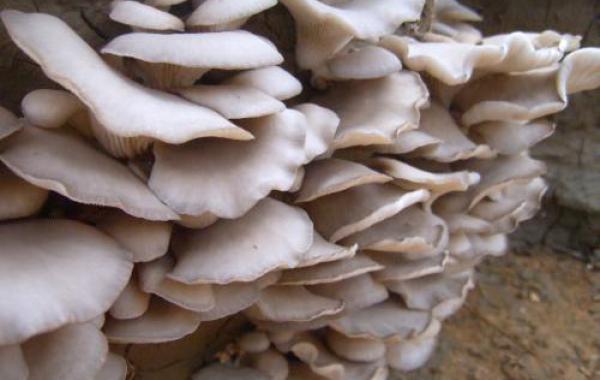
How can edible fungi better balance their nutrition?
How can edible fungi better balance their nutrition?
-

Adding rice husk to mushroom casing soil brings better planting benefits
In conventional mushroom cultivation management, casing soil is a technically demanding task. There are special requirements for the casing soil's texture, soil aggregate structure, aeration, and water retention and holding capacity. In particular, when making large, medium, and small casing soil particles, it is both labor- and time-consuming, and the labor intensity is high. To effectively solve these problems, the author has repeatedly reformed mushroom casing soil technology since 1990, and finally determined to use surface humus soil from within forest stands or paddy field plough layer soil (sandy loam or clay loam are both acceptable) mixed with 5% fresh rice husk
-
There are six things to avoid in mushroom cultivation; steer clear of them to grow better
1. Insufficient pre-wetting: The straw should be soaked thoroughly. Straw that has not been soaked enough requires a large amount of water replenishment when the pile is turned. If the water cannot be made up before the second turning of the pile, it will affect the growth of the mycelium. 2. Uneven turning of the pile: It should be turned according to the principle of "put raw material in the middle, put cooked material on both sides; put the middle at the two ends, and put the two ends in the middle"...
-
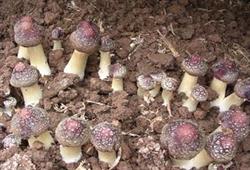
Wine Cap Stropharia Cultivation Tips: How to Case the Substrate Better When Planting?
How should you case Wine Cap Stropharia during cultivation? Here is a method to follow. You can case Wine Cap Stropharia using the following method: spread pre-prepared loam soil over the mushroom bed to a thickness of 2 to 4 cm, no more than 5 cm at most, with about 0.05 cubic meters of soil needed per square meter of mushroom bed. After casing, the moisture of the casing layer must be adjusted, requiring the soil to have a water-holding capacity of 36% to 37%. A simple way to test soil water-holding capacity is to squeeze a soil granule by hand; if the granule flattens but does not crumble and does not stick to your hand, it means the moisture content is suitable.
条件筛选