-

Application of the Year-round Cultivation Technology of Mulberry Branch Edible Fungi in Jinxiu Dayaoshan
Year-round Cultivation Technology of Mulberry Branch Edible Fungi in Jinxiu Dayaoshan
-
Technique for Cultivating Shiitake Mushrooms on Discarded Mulberry Branches in Northern China
Shiitake mushrooms belong to the fungal edible mushrooms, with very high medicinal and culinary value and promising market prospects. After the Agricultural Technology Center of Qianyang County, Shaanxi Province introduced this technique in 1999 and successfully tested it at the county's original seed farm, 44 farmers from 10 villages including Caojiayuan began engaging in shiitake mushroom production. According to 6 years of statistical data, apple orchards (including mulberry orchards) with trees aged 8 to 15 years yield an average of 500 kg of discarded old trees and pruned branches per mu per year that can be crushed into sawdust, producing 625 kg of fresh shiitake mushrooms, with sales revenue of about 2,500 yuan. I. Scale and Forms This technique
-
How to Grow Mushrooms on Mulberry Branches? Detailed High-Yield Cultivation Techniques
In terms of the comprehensive development and utilization of mulberry stalks, since 2006, Hechi City in Guangxi has successfully explored a new "mulberry-mushroom-fertilizer" agricultural circular economy model in Yizhou, Huanjiang and other cities and counties. The "Pleurotus citrinopileatus" (golden oyster mushroom) cultivated with mulberry stalks as the main substrate won the gold award at the 2006 China Hunan (International) Green Products Expo and passed national organic food certification. The success of mulberry branch mushroom cultivation solved the problem that had plagued Hechi City for more than 20 years, where large areas of mulberry stalks were burned as waste, causing resource waste and environmental pollution, and provided sufficient raw material resources for expanding the edible mushroom industry
-
Formulation trial for cultivating Agrocybe aegerita (tea tree mushroom) with mulberry sawdust
At present, Fujian, Jiangxi and other places mostly use hardwood sawdust and cottonseed hulls to cultivate Agrocybe aegerita, but the yield is relatively low. This trial aims to explore suitable formulations for cultivating Agrocybe aegerita with mulberry sawdust and silkworm excrement, in order to make full use of local resources, save costs and improve economic returns. 1 Materials and methods 1.1 Test strain Agrocybe aegerita No. 1, provided by the Kexing Edible Fungi Research Institute of Gutian, Fujian. 1.2 Test formulations (1) cottonseed hull 82%, wheat bran 18%; (2) cottonseed hull 36%, mulberry sawdust 36%, rice straw powder 10%, silkworm excrement
-
Prospects for using mulberry stalks to grow edible fungi look promising
The Microbiology Experimental Plant of the Guangxi Academy of Sciences Institute of Biology recently invented a technique for growing edible fungi using mulberry branches and stalks, and is carrying out an industrialization demonstration in the sericulture experts' compound in Luoxi Town, Yizhou City, Guangxi. According to professionals, the mulberry stalks left over each year after sericulturists plant mulberry and raise silkworms can, after being processed and crushed, serve as the main raw material for cultivating edible fungi (oyster mushrooms, enoki mushrooms, shiitake mushrooms, jade yellow mushrooms, wood ear mushrooms, etc.), and using the mulberry stalks from each mu to cultivate edible fungi can increase income by more than 2000 yuan. Based on the county (city) with the largest mulberry and silkworm production base in the country
-
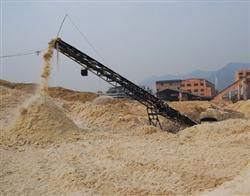
How is bamboo fungus (Dictyophora indusiata) cultivated using mulberry branches and sugarcane bagasse?
How is bamboo fungus cultivated using mulberry branches and sugarcane bagasse? Please give an introduction. Bamboo fungus is a well-known edible mushroom, rich in nutrients and delicious in taste. Previously, there was no artificial cultivation in this county, and no fresh products were sold on the market. People were not as familiar with bamboo fungus as with other mushrooms, thinking that its cultivation techniques might be relatively complicated, but this is not the case...
条件筛选