-

Three things to avoid when feeding vegetables to rabbits; rabbit keepers need to know this in advance
First, avoid using vegetables that have been piled up and turned yellow. Feeding rabbits with vegetables that have been piled up and turned yellow will cause nitrite poisoning in rabbits, and in severe cases can lead to death. Therefore, when feeding rabbits with vegetables, always make sure they are fresh, and do not feed too much at a time; it is best to feed them together with other feed. Second, avoid cruciferous vegetables. Cruciferous vegetables contain sinigrin, which can produce some toxins that promote thyroid enlargement and severely damage the rabbit's liver and kidneys. Third, avoid vegetables damaged by pests. Feeding rabbits with vegetables infested by aphids, cabbage caterpillars, and the like
-
What to do when the new leaves of a sasanqua fall off
I bought a pot of sasanqua from the south and have been growing it for 3 years. It grew well, but starting this spring, red dots appeared on the newly sprouted leaves, and soon the leaves fell off. I tried carbendazim several times with poor results. What is causing this? How should it be prevented and treated? Answer: Based on what you described, together with the leaves you enclosed, it can be preliminarily inferred that the new leaves were damaged by mites and then infected with web blotch disease. This disease occurs more severely from April to June and from September to October. It mainly occurs on new leaves that have fully
-
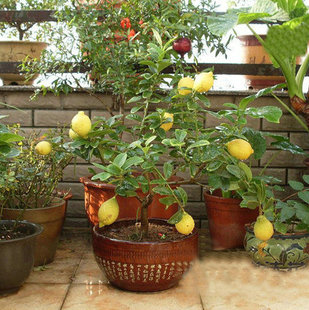
What to Do When Potted Lemons Drop Their Fruit? Causes and Solutions
Many gardeners love potted lemon trees. Not only can they serve as foliage plants, but gardeners also hope to see them covered with lemons. However, some gardeners have found that although their lemons set fruit, the fruit then drops off, and they do not know what to do. A gardener asks: The lemon I bought 3 years ago drops its fruit every year when the fruit reaches the size of a fingernail.
-

What to Do When a Banyan Tree Loses Its Leaves? Cause Analysis and Solutions
Currently, the banyan trees grown by plant enthusiasts are mainly of two types: one is the ginseng ficus (Ficus microcarpa 'Ginseng'), and the other is the golden coin ficus (Ficus microcarpa 'Golden Coin'); both can be called banyan trees. Some enthusiasts have noticed that their banyan tree is dropping leaves and don't know what to do. In fact, when a banyan tree drops leaves, the situation must be clearly identified, and you should not blindly follow methods found online to try to save it.
-
When is the covering time for protected cultivation of apricots?
For most apricot varieties, they must undergo a low-temperature period of 700-1000 hours below 7.2°C to break dormancy. Therefore, protected cultivation must raise the temperature only after the apricot's chilling requirement has been met, for success to be possible. If the temperature is raised too early, the apricot trees cannot sprout and bloom normally, and in severe cases it will cause a large number of flower buds to drop, uneven flowering, and severe flower and fruit drop. The timing of temperature increase should also be carefully decided based on the variety's chilling requirement and weather conditions. 1. Covering time for plastic greenhouses: Plastic greenhouses have poor insulation performance, so apricot trees must pass dormancy under natural conditions. The suitable covering time is generally from late January to early February, and the covering time is the temperature-raising time. If the weather is abnormal, such as a warm winter, the covering time should be appropriately delayed. For plastic greenhouses, ground film should be applied 15-20 days before covering to allow the soil temperature to rise slowly.
-
What are the feed requirements when selecting a site for a deer farm?
Feed requirements for choosing a deer farm site: the deer farm should have sufficient land and a stable feed base, with an adequate feed supply. In mountainous, semi-mountainous and grassland areas, there must be enough grazing pasture. In the past, deer were mostly "raised on forest resources"; in the future, planted feed should be the main approach, and deer farming should develop toward farming areas, farming-and-grazing areas, and farming-and-forestry combined areas, because these areas have abundant agricultural by-products that can ensure an adequate feed supply.
-
What issues should be noted when harvesting edible mushrooms
1. Harvest at the right time. When edible mushrooms are 70-80% mature, they look beautiful and taste good. Take shiitake mushrooms (Lentinula edodes) as an example: the sign of 70-80% maturity is that the partial veil has broken, the cap has not yet fully opened and still curls inward slightly, forming a "gong rim"; the gills have fully extended and turned from white to yellowish-brown or dark brown. This is the suitable harvest period for shiitake mushrooms. 2. Pay attention to picking technique. When picking edible mushrooms, all stemmed mushrooms, such as shiitake, straw mushrooms, oyster mushrooms, and bamboo fungus (Phallus indusiatus), must be picked according to the principle of picking the large and leaving the small. When picking, pinch the base of the mushroom stem tightly with your thumb and index finger,
-
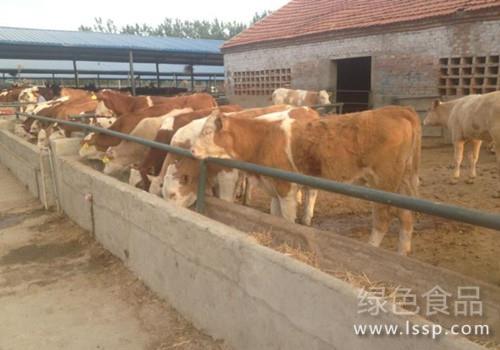
What to do when beef cattle have diarrhea and are not acclimated after long-distance transport
Long-distance travel causes diarrhea in beef cattle; what to do when beef cattle are not acclimated
-
What are the methods for keeping piglets warm when they are born in winter?
When sows give birth in winter, the cold weather affects piglet survival, especially for rural free-range households, which have neither farrowing crates nor warming facilities, so the survival rate of piglets born in winter is relatively low. For experienced sow breeders, building a small warm nest for newborn piglets is a good method to improve piglet survival and increase breeding returns. Below is an introduction to how to build a small warm nest for piglets: Before the sow gives birth, on one side of the pig pen, preferably in a sheltered, sunny spot, build a small nest 1 m long, 1 m wide and 50 cm high, and connect it to the pig pen with an opening for the pigs to pass through.
-
Six points to note when injecting a sick turtle
In recent years, artificial turtle farming has gradually gained popularity, but diseases have also shown a trend of local spread. There are many ways to administer medication to prevent and treat turtle diseases, such as oral medication, applying medication, injections, and medicated baths. Once a turtle becomes ill, the treatment work is very different from that for other animals, mainly because turtles have a very hard shell. According to the author's more than ten years of breeding and production practice, the injection method is the most effective, because the medicinal liquid is injected directly into the turtle's body and absorbed quickly. However, the author reminds the majority of turtle farmers that when injecting turtles, the following points should be noted: 1. Never use
条件筛选