-
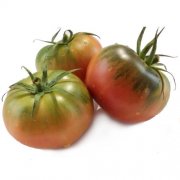
Is the strawberry tomato genetically modified, how tall can it grow, and can pregnant women eat it?
There are many varieties of tomato, so do you know one of them called the strawberry tomato? Just hearing the name of this variety makes people ask: is the strawberry tomato a genetically modified food, and can pregnant women eat strawberry tomatoes? Let's take a look together.
-

How much do straw mushroom spawns cost? A detailed guide to cultivation methods
Straw mushroom spawn prices and cultivation methods
-

What are the propagation methods of straw mushrooms? This article explains in detail
Propagation methods of straw mushrooms
-

How to cultivate lotus in shallow ponds using straw? Detailed explanation of the new technique
Lotus cultivation with straw in shallow ponds gives high yields, is easy to harvest, saves water and labor, and the planting area is expanding year by year, with an average yield of 4,000 kg of lotus roots per mu, more than 30% higher than ordinary shallow-pond lotus. 1. Choose suitable varieties. For planting stock, choose early-maturing varieties with thick, round roots, white skin, crisp and tender flesh, sweet taste, good quality and high yield, such as "Elian No. 4", "Elian No. 5", "Jinan White Lotus Root", etc. 2. Build the lotus pond. 1. Site selection and material preparation: The lotus pond should be located in a sunny place without shade from trees, such as wasteland at the edge of the village, abandoned homesteads,
-
Detailed Explanation of High-Efficiency Cultivation Techniques for Shallow-Water Lotus with Straw
High-efficiency cultivation of shallow-water lotus with straw has developed quite rapidly in Feixian County, Shandong Province over the past five years. In 2005, 8,870 lotus ponds were built, covering an area of more than 5,300 mu. The reason is that this technique has obvious advantages over traditional shallow-water lotus cultivation. Mainly, it has high yield and good benefits. The average yield per mu of shallow-water lotus cultivated with this technique is 4,923 kg, which is 1,242 kg more than the 3,681 kg of ordinary cultivation, an increase rate of 31%, and the quality is good with a high marketable rate, with a net increase in income of more than 1,800 yuan per mu. Analysis shows,
-
What Are the Benefits of Returning Wheat Straw to the Field? Methods and Precautions Explained in Detail
I. Benefits of Returning Wheat Straw to the Field. Returning wheat straw directly to the field not only reduces the number of tillage operations in the wheat field and lowers the cost of @#@245@#@ production, but also achieves rational use of the high-stubble wheat straw resource, avoids the practice of burning wheat straw, and helps conserve soil and water. After wheat straw is returned directly to the field, the straw covering the plow layer can reduce surface runoff during the rainy season, lessen soil compaction and cracking, and improve the soil's capacity to store water and conserve moisture; after the wheat straw decomposes, it can increase soil organic matter content, improve soil physical and chemical properties, and provide crops with various nutrient elements
-
Rice straw return technology is being vigorously promoted and applied.
Vigorously promoting rice straw return is one of the most economical and effective ways to recycle nutrients through the soil-crop-soil cycle. It not only plays a very important role in improving soil and building up soil fertility, but also has great significance for improving soil potassium and silicon nutrient conditions, balancing crop nutrition, and alleviating the contradiction between the shortage of potassium fertilizer resources in our country and the excessively rapid rise in chemical fertilizer prices. 1. Increasing soil organic matter content. Rice straw has a high organic matter content. Generally, dry rice straw has an organic matter content of 40%. After being returned to the field, it is beneficial to the
-
Correct Methods and Technical Key Points for Returning Rice Straw to the Field
1. Rice straw mulching in wheat fields. After wheat sowing is completed, use 250-300 kg of rice straw per mu, cut into 10-20 cm straw segments, and spread evenly over the field so that the straw does not form piles and the soil is not left exposed. 2. Rice straw mulching in rapeseed fields. When transplanting rapeseed, plant the seedlings according to the specified spacing into holes with sufficient basal fertilizer, cover with soil, and then evenly spread rice straw over the whole field at 300 kg/mu, so that the straw does not cover the holes (seedlings) and the soil is not left exposed, while also applying integrated chemical weed control and necessary field management measures. 3. Drainage and
-
How to Return Rice Straw to the Field? A Detailed Guide to Five Practical Techniques
1. Short-cut rice straw incorporation by plowing technique. Cut the rice straw by hand or machine into lengths of 15-20 cm, and spread it evenly over the paddy field. Generally, the amount of dry rice straw spread per mu is 200-250 kg; if early rice straw is used for return, the amount spread per mu of main field is 1/2 or 2/3 of the total rice straw per mu. After the rice straw is spread, on the basis of the original fertilizer amount, apply an additional 8-12 kg of ammonium bicarbonate or 5-6 kg of urea per mu as base fertilizer; if it is a cold-waterlogged field, apply 15-25 kg of lime per mu in combination to accelerate the softening and rotting of the rice straw. The final
-
Detailed Explanation of Key Techniques for Straw-Based Cultivation of Lotus Root in Shallow Ponds
Straw-based cultivation of lotus root in shallow ponds gives high yields, is easy to harvest, saves water and labour, and the planting area is expanding year by year. The average yield is 4000 kg of lotus root per mu, more than 30% higher than that of ordinary shallow-pond lotus root. 1. Choosing suitable varieties. For seed lotus root, choose early-maturing varieties with thick, round rhizomes, white skin, crisp and tender flesh, sweet taste, good quality and high yield, such as 'Elian No. 4', 'Elian No. 5', 'Jinan White Lotus Root', etc. 2. Building the lotus pond 1. Site selection and material preparation: the lotus pond should be chosen in a sunny place without shade from trees, such as village-edge wasteland, abandoned house sites, disused pits and ponds, low-lying abandoned land, etc.
条件筛选