-
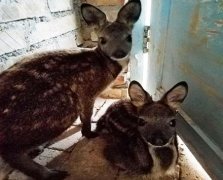
Musk Deer Farming Techniques: Rearing Methods and Nutritional Requirements for Young Musk Deer
The goal in rearing young musk deer is to ensure that all newborn fawns survive without disease and to develop in them excellent production performance. So how should they be reared? Let us take a look together. During growth and development, young musk deer steadily gain body weight and body measurements, and their metabolism is very vigorous.
-

Rose cultivation should be carried out according to differentiated needs
Different people appreciate roses from different angles, and different rose varieties may have different uses. Therefore, rose producers need to be good at discovering these situations and actively explore cultivation methods for different rose varieties to respond to ever-changing market demands. Overall, roses have certain weaknesses
-

After the Beginning of Autumn, cotton needs even more attention to foliar topdressing
Cotton foliar topdressing, commonly known as leaf spraying fertilizer, means spraying a fertilizer solution onto the stems and leaves of the cotton plant so that the stems and leaves absorb nutrients, thereby nourishing the whole plant (including the root system). It has the advantages of saving fertilizer, taking effect quickly, and not being limited by soil conditions. It is an important yield-increasing measure for quickly supplementing nutrients to the cotton plant in the late growth period, especially after the "Beginning of Autumn." Why is this said? Many studies have proven that nutrients absorbed by the leaves, like nutrients absorbed by the roots, can be transported
-
What preparation work needs to be done for artificially rearing queen bees?
Before artificial queen rearing, the following preparation work needs to be done: (1) Selecting parent colonies. Select healthy, disease-free colonies whose honey or royal jelly yield exceeds the average yield of the whole apiary, with weak swarming tendency and rapid colony development, as parent colonies. The drone colony is the colony that provides drones, and the queen mother colony is the colony that provides queens. Whether drone colony or queen mother colony, both are used to rear bee larvae. The same drone colony can also rear thousands of drones. If only one or two breeding colonies are used every year to rear virgin queens and drones, the whole apiary's colonies will undergo inbreeding, causing productivity and
-
Garlic "throwing small braids" phenomenon needs early prevention
In recent years, garlic has every year exhibited the phenomenon of "throwing small braids" due to various reasons. Scientifically speaking, this is the secondary growth of garlic, a major physiological phenomenon that affects garlic yield and quality, and it is also a problem of widespread concern among farmers in garlic-growing areas. In some plots, it can even cause widespread total crop failure of garlic, and its causes are relatively complex. As an agricultural technician providing postal services for agriculture, rural areas and farmers, the author now introduces the main causes and control measures as follows: 1. Select varieties suitable for local cultivation.
-
Lantang Pig Urgently Needs Conservation, Protection of Local Fine Breeds Is a Pressing Task
Lantang Pig: A Local Fine Breed Urgently in Need of Conservation. China's only inbreeding-tolerant local fine breed, priced as high as 8 yuan/jin. The Lantang pig originated in Lantang Town, Zijin County, Heyuan City, and has excellent characteristics such as early maturity and easy fattening, a docile temperament, tolerance of coarse feed, strong adaptability, strong reproductive capacity, thin skin, delicious meat, and a high degree of inbreeding tolerance. It is a local fine breed of China and has been included in the national-level livestock and poultry breed resource protection scope. However, due to changes in market demand in recent years, the number of Lantang pigs has dropped sharply, and the breed is in danger of extinction.
-
List of 32 Banned Fish Drugs, Aquaculture Needs to Pay Attention
How to prevent and treat fish diseases and correctly use fishery drugs is very important. If fishery drugs cannot be used correctly, it will bring economic losses to aquaculture farmers. In this regard, Li Zhengjun, Director of the Fishery Drug and Fishery Feed Division of the Sichuan Provincial Fisheries Bureau, stated that some fishery drugs are banned by the state. If used, they will lead to very serious consequences. It is hoped that aquaculture farmers will never use banned fishery drugs. There are 32 types of banned fishery drugs in total, which are: phorate, benzene hexachloride (BHC), lindane, toxaphene, dichlorodiphenyltrichloroethane (DDT), calomel, mercurous nitrate, mercury acetate, carbofuran, chlordimeform, amitraz
-
Rabbits Have Particular Water Needs: A Full Breakdown of Scientific Watering Methods
As the saying goes, "Better to lack a handful of grass than a mouthful of water," which fully illustrates the importance of drinking water for rabbits. So, what exactly does water do for a rabbit's growth, what happens after a rabbit is short of water, and how do you give rabbits water scientifically? 1. The role of water in rabbit growth. In the various tissues of a rabbit's body, water accounts for 70%, and in the blood it can reach 80%; the water content of bones, muscles and internal organs is 45%-75%. Not only is water indispensable for the digestion, transport and absorption of nutrients from all kinds of feed, the excretion of waste products and toxins produced by metabolism is also inseparable from water.
-
Plum rain season has arrived, cotton needs early prevention and control of the "three harms"
Currently, cotton seedlings have entered the squaring stage, and at the same time have stepped into the annual plum rain season. According to meteorological data, from May 30 to 31, in some major cotton-producing counties, cities and districts of Wuhan, Xiaogan, Suizhou, Ezhou and other cities, rainfall reached over 100 mm, causing some cotton fields to be flooded by heavy rain, and in some low-lying sections of cotton fields the cotton seedlings were completely submerged. While cotton seedlings suffer from waterlogging damage, diseases and weed damage also follow one after another. The "three harms" of cotton have struck cotton farmers simultaneously. According to surveys, some cotton fields now have
-

What preparatory work needs to be done before buying calves?
What preparations should be made before buying calves
条件筛选