-
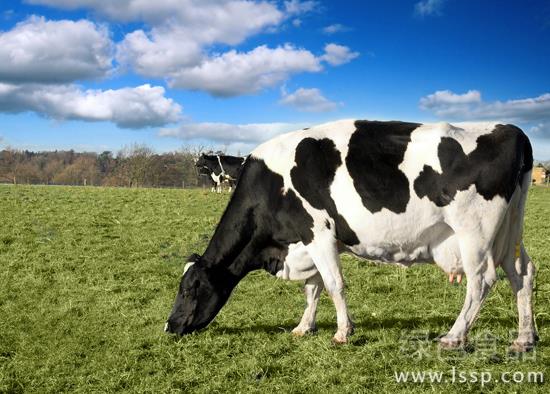
Be cautious when feeding silage to dairy cows in spring: master these feeding key points
Be cautious when using silage in spring: key points for feeding silage to dairy cows
-

How can sheep farmers prevent sheep diseases? Six major measures to master
1. Doing a good job of scientific feeding and management is an important foundation for preventing sheep diseases. Practice has proven that most sheep diseases are caused by improper feeding and management. Based on the living habits of sheep, do a good job with the three words "eat, housing, movement": Eat - feed enough grass, supplement concentrate, and standardize the formulation of the daily ration. Housing - ventilation in summer, warmth in winter, clean and hygienic pens that are dry. Movement - housed sheep flocks need exercise, and sheep in late pregnancy should be prevented from falling. 2. It is forbidden to buy sheep from epidemic areas. Sheep purchased from non-epidemic areas should also first be isolated and raised for 1 month, and only after it is truly confirmed that they are disease-free
-
There are techniques for medicating poultry, and the correct methods must be mastered
1. When mixing drugs with water or feed, the amount of medicated water or feed should be properly controlled so that it can be consumed within 2 hours. When mixing medication, the drug and feed should be evenly blended; when using injectable drugs, the volume of liquid per injection: young poultry no more than 0.2 ml, growing poultry no more than 0.5 ml, and adult poultry no more than 1.5 ml. 2. When using antibiotic drugs, the first dose should be doubled. During treatment, generally 3-4 drugs with different antibacterial spectra can be selected to broaden the bactericidal range. For preventive medication, only one drug is needed.
-
How to control the cupreous chafer? Master its occurrence patterns and key control points
The cupreous chafer beetle belongs to the order Coleoptera, family Scarabaeidae. It occurs in many apple orchards in our region, and its hosts include apple, hawthorn, crabapple, pear, apricot, peach, plum, Japanese apricot, persimmon, walnut, strawberry, and so on. I. Damage symptoms: Apple trees suffer the most severe damage from the cupreous chafer beetle; the adults feed on leaves, often causing large areas of young fruit trees to have incomplete leaves, and even entire trees stripped of all leaves. II. Occurrence patterns: (I) The cupreous chafer beetle has 1 generation per year, overwintering as mature
-
Master the Three Earlies and Three Skills for Spring Potato Planting to Achieve High Returns
Three Earlies: Choose early-maturing varieties. Practice has proven that selecting high-yielding, high-quality, virus-free potato varieties with a growth period within 70 days (from emergence to harvest) is the key to achieving high, stable yields and quality in spring-planted potatoes. Currently ideal varieties include Holland No. 7, Holland No. 15, Zhengshu No. 6, etc. Start sprouting early. Using a sunny cold frame before planting to pre-sprout can make potatoes emerge early and uniformly, with complete and strong seedlings, promoting early plant development and early tuber formation - this is an important yield-increasing measure. The key points of sprouting technique are: before planting
-
Detailed Explanation of Lilium dauricum Propagation Methods, Easily Master Seedling Techniques
(1) Growth, Development and Habitat of Lilium dauricum Lilium dauricum is a plant that germinates relatively early. In the cold Heilongjiang Province, seedlings break through the soil and germinate in late April when the soil has just thawed. The most suitable growing environment for Lilium dauricum is roadsides, forest gaps, meadows and other places with good soil and moisture conditions and sufficient light. Investigations and experiments have proven that when the light intensity is 50% to 100%, Lilium dauricum grows best, with sturdy plants reaching 80 to 130 cm in height, producing 1 to 12 flowers per year, full fruits, large underground bulbs, and up to 6 small bulbs formed at the base. When the relative light is about 25%, Lilium dauricum becomes slender and weak, relatively short, with only 1 to 2 flowers per plant; although it can bear fruit, at most 1 fruit is produced, and it is not full, with small seeds and small underground bulbs, and the plant begins to wither in August. When the relative light is only about 10%, Lilium dauricum plants are short and small, cannot flower or produce only one flower, do not set seed, have small underground bulbs, and the above-ground parts gradually wither in mid-July. Lilium dauricum is suitable for growing in soil with a moisture content of 30%-40%. When the soil moisture content is below 20%, the plants are prone to withering or death.
-
How to store seed lily bulbs? Master these key points
Due to crop rotation scheduling, the harvest period and sowing period of lilies do not coincide. Lily bulbs kept for seed must be stored for 30 to 50 days after harvesting before they can be sown. To prevent damage from pests and diseases, and spoilage and deterioration during storage, the following key points should be observed when storing seed lily bulbs: First, harvest on a sunny day around End of Heat (Chushu, in August). Second, the lilies used for storage as seed must be fully mature, with low moisture content, free of disease and pests, and undamaged. When collecting the bulbs and loading them into baskets, remove the stems, clean off all soil, trim off the fibrous roots, handle gently, and grade
-
Detailed Guide to Large-Leaf Goji Berry Cultivation: Master the Method and Grow Goji Berries Well
I. Large-leaf goji berry (Lycium chinense) has strong adaptability to the environment and can be cultivated in both northern and southern China. The optimal growing temperature is 15-25°C. In South China, cultivation is mainly in autumn and winter; when temperatures rise above 25°C, growth suffers and leaves quickly drop, with new growth only resuming in autumn. However, in North China, it can still grow during the hot, rainy summer season when temperatures exceed 30°C, and it is also very cold-hardy. After the aboveground branches drop their leaves in late autumn and early winter, even though winter temperatures sometimes drop below -10°C, it can still sprout and grow the following spring. Goji berry is also shade-tolerant and grows best in calcareous soil.
-
How to prevent low yields in Gastrodia elata? Master these measures
1. Poor quality Armillaria mushroom-wood material. Most farmers habitually use old wood logs from previous years' Gastrodia elata planting as mushroom-wood material, that is, the old-log-plus-new-log method of cultivating Gastrodia elata. Old wood logs have poor wood quality; not only have most of the nutrients already been consumed and used up, and the Armillaria aging phenomenon is serious, but there are also many factors carrying miscellaneous molds, which not only harms the growth of Gastrodia elata but also destroys the environmental conditions for Armillaria growth, so that the Armillaria source cannot well supply nutrition to Gastrodia elata, resulting in low per-unit yield of Gastrodia elata, or even total crop failure. 2. Use of multi-generation seed with degraded varietal characteristics
-
How to prevent and treat runt pigs? Pig farmers need to master these methods
Runt pigs, commonly known as "cushion-nest pigs", "little old man pigs", "iron pigs". During the growth and development stage, pigs suffer from the influence of certain adverse factors, their development is stunted and growth stops. Although such pigs are old in age, they are very small in size, with rough and messy bristles and extreme emaciation, forming a body shape that is pointed at both ends and large in the middle; they eat feed but do not gain meat, causing pig farmers to suffer great losses. 1 Manifestation characteristics Runt pigs mainly show a small, thin and weak body, stunted growth and development, abnormally excited spirit, restlessness, rough back hair, dull skin without luster, and decreased elasticity.
条件筛选