-

Comprehensive Measures to Increase the Weaning Weight of Piglets
If weaned at the same age, the greater the individual weaning weight of the piglet, the stronger its constitution, and correspondingly the piglet has strong vitality, gains weight quickly after weaning, has a high feed conversion rate, and the economic benefits obtained are also higher. Therefore, taking comprehensive measures to strive for the maximum individual weight of weaned piglets has become one of the keys to improving the economic benefits of pig farming. 1. Select sows with a long body shape, and carry out crossbreeding of sows to increase the birth weight of piglets. The birth weight of piglets determines, to a certain extent, the strength of the piglets' vitality and their
-
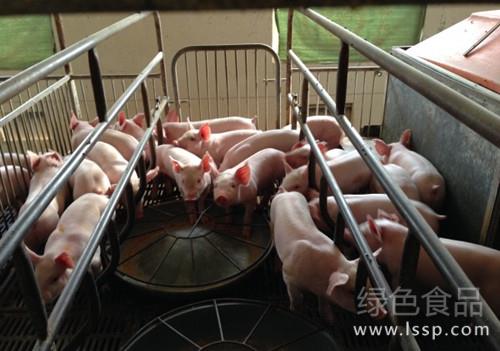
Piglet weaning stress is considerable, and the feeding method after weaning must be mastered
Piglet weaning stress is considerable, and the feeding method after weaning must be mastered
-
Complete Analysis of Korean Pine Seed Collection Time and Methods
The time and methods for collecting Korean pine seeds are as follows: in natural Korean pine forests, the proportion of seed-bearing trees in 80-to-100-year-old stands accounts for over 91%. To solve the problem of insufficient Korean pine seeds, clonal seed orchards have been established, but they have not yet produced large quantities of seed. In natural forests, stands with good site conditions and vigorous growth are selected and designated as seed production stands, with intensified tending and management to prepare for seed collection. Korean pine cones mature from September to early October. When the cones turn from green to yellow-green and some seed scales begin to split, they enter the early ripening stage. After that, the seed scales gradually turn yellow, and individual cones begin to fall
-
How to Prevent and Treat Anthracnose in Phalaenopsis Orchids? A Complete Guide to Practical Methods
Anthracnose occurs to varying degrees in Phalaenopsis cultivation areas and introduction areas, harming Phalaenopsis and many other flowers. Symptoms: It mainly affects the leaves, initially appearing as small, light-colored round spots, which gradually expand into large brownish, nearly circular blotches with dark brown edges and lighter centers; later, small black dots appear on the lesions, with a yellow halo surrounding them. Disease pattern: The pathogen is a fungus, Colletotrichum. The fungal spores spread through airflow and water droplets, and the disease often occurs when plants are weakened by high temperatures, sunscald, low temperatures, chilling injury, or nutritional imbalance. Control methods: (1) The orchid room
-
What is anthracnose in Chinese orchids? Let us learn about this disease
Anthracnose in Chinese orchids affects orchids of the genus Cymbidium such as Spring Orchid (Cymbidium goeringii), Faber's Cymbidium (Cymbidium faberi), Four-season Orchid (Cymbidium ensifolium), Chinese Cymbidium (Cymbidium sinense), and Cold Orchid (Cymbidium kanran), causing scorched black spots on leaves and fruits, and in severe cases the entire leaf dies. Symptoms: In the early stage of the disease, round or oval red-brown spots appear in the middle of the leaf, and semicircular ones at the leaf margin. When they occur at the leaf base, large spots or a large number of them can also cause the entire leaf to die. In the later stage, the center of the spot becomes lighter in color, and the upper ring splits longitudinally. Spots on fruits are irregular, appearing as elongated dark brown patches. Pathogen: The disease is caused by several species of fungi. According to isolation and culture by the Shanghai Institute of Landscape Science,
-
What plant is the red cattail? Let us get to know this evergreen shrub
Among flowers, quite a few are named after dogs, and the "red cattail" is one of them; the red inflorescence of the female plant closely resembles a dog's tail, hence the name. The "red cattail" is an evergreen shrub of the genus Acalypha in the spurge family (Euphorbiaceae), with a plant height of 0.5-2 m; some types can be kept at about 30 cm tall under pot cultivation; the leaves are ovate, pointed at the tip, with coarse serrated edges, bright green in color and slightly lighter on the underside, and the leaf stalks have fine hairs; it is dioecious, and the female plant bears eye-catching bright red cattail-shaped spike inflorescences, up to 50 cm long and coarse
-
A Complete Analysis of the Key Points of Large Flat Apricot Cultivation and Management
1. Planting method Before planting, soak the seedling roots in water for 24 hours, take them out and dip them in a water-retaining agent, then plant them. After planting, irrigate thoroughly, and once the water has seeped down, cut the trunk back to a height of 80-100 cm. With the main trunk as the center of the planting hole, cover with 1 m x 1 m plastic film, press the edges of the film down firmly with soil, and leave the area around the planting pit slightly higher. Years of practice have proven that covering with plastic film after planting both retains water and raises soil temperature, causing the tree to sprout early and grow quickly. One week after planting, slip a plastic bag over the trunk, with a bag length of 40 cm and a width of 10 cm. To prevent
-
What kind of fish is the American flagfish? Let's get to know this fish
The American flagfish, Jordanella floridae, is also known as the flagfish and the star-striped fish. Place of origin: Florida, USA. Appearance: the body grows up to 6 cm long, and its shape resembles a moonfish, but the back and belly are broad, and the caudal peduncle is also wide. The head and snout are bluntly rounded. The outer edge of the caudal fin is straight. The dorsal fin is larger than the anal fin, the dorsal and anal fin edges are curved, and the body color is variable, with red, pale yellow, blue, purplish red and other colors, some deep and some light, some leaning blue or leaning red, and the whole body has more than 10 longitudinal rows of star-spotted stripes, while the dorsal fin is covered with dark star spots; its star-spotted stripes closely resemble the stars-and-stripes pattern of the American flag, which is how it got its name. Habits
-
Key Points of Feeding and Management Techniques for Suckling Piglets
The feeding and management of suckling piglets mainly involves grasping the three feeds (colostrum feeding, starter feeding, and vigorous feeding) and passing the three critical stages (the newborn stage, the supplementary feeding stage, and the weaning stage). 1. Grasp colostrum feeding well and pass the newborn stage well (1) Implement attended farrowing, do a good job of delivering the piglets, prevent piglets from being crushed to death, freezing to death, or dying in the womb due to dystocia, and reduce piglet mortality; (2) Promptly rescue "apparently dead piglets"; artificial respiration may be performed, or the "apparently dead piglets" may be immersed in warm water at 35-40°C with their heads above the water surface, or iodine tincture, alcohol, or ammonia water may be applied to the piglets' nostrils for medicinal
-
A Complete Analysis of the Chemical Components, Effects and Pharmacological Actions of Reishi Mushroom
Reishi mushroom [Ganoderma lucidum (Fr.) Karst] is a fungus of the genus Ganoderma in the class Basidiomycetes. Since ancient times it has been known as the "immortal herb" and "auspicious herb". It is a precious traditional Chinese medicine for strengthening the vital essence and consolidating the constitution, and for nourishing and invigorating the body. It has a long history of medicinal use in our country and extremely high medicinal value, and is regarded as a precious Chinese medicinal material and a treasure in the treasury of traditional Chinese medicine. In the Eastern Han dynasty, the (Shennong Bencao Jing) listed reishi mushroom as a top-grade substance, holding that "taken over a long time, it lightens the body, prevents aging, and prolongs life like an immortal." Modern medicine has proven that reishi mushroom contains a variety of physiological
条件筛选