-
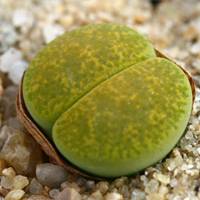
What other names does Lithops have? Let us learn about its common aliases.
Lithops is native to southern and southwestern Africa, commonly found in crevices of rock beds and among gravel. It is described as "living stones." It grows and blooms during the non-rainy season; at peak bloom, Lithops covers the desert like a huge flower blanket. But when the dry summer arrives, the desert returns to a world of "stones."
-
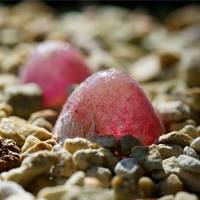
What are the characteristics of the bulb? A complete guide in one article
The succulent bulb is a plant in the genus Conophytum of the family Aizoaceae. The plant's surface is bright green and semi-transparent; in a suitable environment, it blooms with pale purple flowers in spring or autumn. In sunlight, the plant turns slightly red, and its crystalline, translucent appearance looks sparkling, like little glowing light bulbs, extremely beautiful.
-
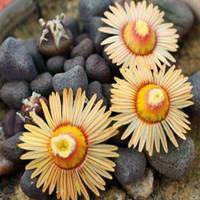
What are the characteristics of the Tang fan (Mitrophyllum)? A complete guide to this plant
Tang fan (Mitrophyllum) is a perennial succulent herbaceous plant of the genus Mitrophyllum in the family Aizoaceae, native to South Africa. It prefers a cool, dry environment with plenty of sunlight, dislikes intense heat, is not tolerant of waterlogging, and is drought-tolerant. It grows during the cool season and goes dormant during the high temperatures of summer.
-
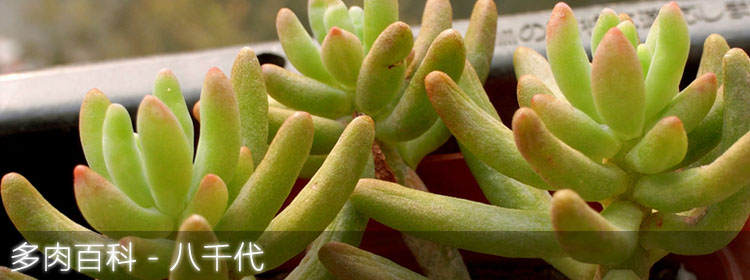
What are the characteristics of Haworthia truncata? A complete guide in one article
Haworthia truncata, also known as truncated haworthia, is a succulent plant (also called a succulent) of the genus Haworthia in the family Liliaceae. The plant has no stem, and its fleshy leaves are arranged in two rows in a fan shape. The leaves are upright, curving slightly inward, with a slightly sunken top. The surface is rough, green to dark greenish-brown, with small wart-like protrusions, and the cross-section of new leaves is partly transparent and grayish-white.
-
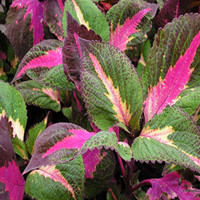
What are the other names for perilla? Let us introduce you to its other names
Perilla has been cultivated and used in China for nearly 2000 years and plays a huge role in many aspects. Next, let us introduce this plant, perilla, to you.
-
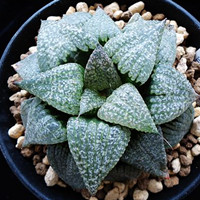
What are the other names for Haworthia 'Shirogin'? Let us learn about its aliases
Haworthia 'Shirogin'? That name sounds so strange! It does not sound like the name of a plant at all. Why is it called "Shou"? And why is it also called "Shirogin"? With these questions in mind, the editor will now introduce Haworthia 'Shirogin' to everyone.
-
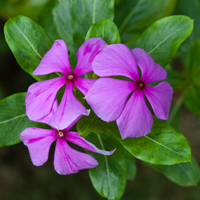
What is Catharanthus roseus (Madagascar periwinkle)? A complete introduction to this flower
Catharanthus roseus, also commonly known as Madagascar periwinkle, has had many cultivars bred in Taiwan, China, with ever-larger blooms. Catharanthus roseus is not only ornamental but also a member of traditional Chinese herbal medicine, with good anti-tumor properties.
-
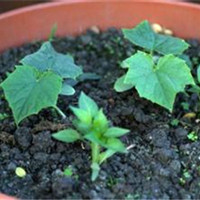
What are the growth habits of cucumbers? A complete guide in one article
Cucumber, a plant of the genus Cucumis in the gourd family. Also called hu gua and qing gua. The fruit is oily green or emerald green, with soft small spines on the surface. It is widely cultivated throughout China, and can be grown on a large scale in the open or on a small scale. Balcony growing is also a good choice.
-
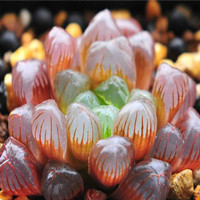
What other names does Haworthia cooperi var. truncata have? Let's find out together.
Haworthia cooperi var. truncata, native to South Africa, is very distinctive for its cute shape and translucent appearance, and is often used in mini combination plantings. Below is some information about Haworthia cooperi var. truncata.
-

What kind of growing environment suits lettuce? Detailed planting conditions
Lettuce originated in the Mediterranean coastal region of Europe and was domesticated from a wild species. It can be eaten raw, crisp and refreshing with a slight sweetness. Especially in coastal cities, lettuce is widely grown, appearing not only in greenhouses but also on ordinary people's balconies.
条件筛选