What other names does Haworthia cooperi var. truncata have? Let's find out together.
The appearance and form of Haworthia cooperi var. truncata
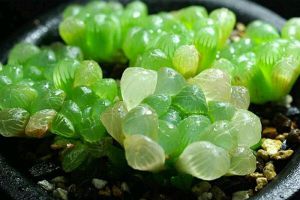
Haworthia cooperi var. truncata is a succulent plant, with fleshy leaves arranged compactly in a rosette shape like a lotus seat.
The leaves are plump and thick, emerald green, and what makes them special is that the upper half of Haworthia cooperi var. truncata is transparent or semi-transparent.
The stems and leaves of Haworthia cooperi var. truncata have dark linear markings that turn reddish-brown when there is plenty of sunlight, and the leaf tips have small "bristles."
Haworthia cooperi var. truncata is also called a "window plant" because in South Africa it generally buries most of its body in the soil, exposing only the windowed part above ground, to adapt to the dry summer.
The growth habits of Haworthia cooperi var. truncata
Haworthia cooperi var. truncata prefers a cool, semi-shaded environment; when air humidity reaches a certain level, the whole plant becomes translucent.
Haworthia cooperi var. truncata is drought-tolerant but not cold-tolerant, and its growing period is in the relatively cool spring and autumn seasons.
Haworthia cooperi var. truncata dislikes high temperatures and humid environments, cannot be exposed to scorching sun, and is afraid of shade and waterlogged soil.
The main value of Haworthia cooperi var. truncata
Haworthia cooperi var. truncata is relatively small in appearance, and the shape and color of its leaves are very attractive, giving it a certain ornamental value.
When made into a potted plant and placed next to household appliances, Haworthia cooperi var. truncata can absorb radiation.
Haworthia cooperi var. truncata can also be planted indoors, where it can absorb harmful substances such as formaldehyde and purify the living environment.