-
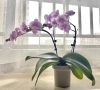
How to Handle Yellowing, Dropping, and Rotting Leaves on Phalaenopsis Orchids After the Flowers Fade
Do you often run into this situation: after a Phalaenopsis orchid finishes blooming, its leaves start turning yellow and dropping, and it just breaks your heart to watch? Don't worry! Actually, the main causes are just natural metabolism, root problems, or inadequate care, and you can easily solve it by treating the right cause. First, figure out why the leaves are turning yellow.
-

Reasons Why Phalaenopsis Orchid Buds Turn Yellow and How to Fix It
During routine care, if you notice the buds of your Phalaenopsis orchid turning yellow, this is actually the plant's way of "crying for help." Below, I'll explain the causes and the solutions. Temperature: Phalaenopsis orchids are quite delicate and thrive best in environments of 15-25°C. If the temperature stays below 10°C or above 30°C for too long, the buds are prone to turning yellow.
-

How big is a mature Phalaenopsis orchid plant, and what are its characteristics?
For people new to Phalaenopsis orchids, understanding information about mature plants is crucial. How big exactly is a mature Phalaenopsis plant? What characteristics does it have? These questions not only relate to judging the plant's growth state, but also affect subsequent care and appreciation. In terms of size, the size of a mature Phalaenopsis plant varies to a certain
-

The Impact of a Poor-Condition Mother Plant on Phalaenopsis Propagation and How to Solve It
In the propagation of Phalaenopsis orchids, the condition of the mother plant plays a decisive role. If the mother plant used for propagation is in poor condition, it will trigger a series of problems that affect the success rate of propagation and the quality of the new plants. When a Phalaenopsis mother plant is in poor condition, the first thing affected is a significant drop in propagation success rate. The mother plant itself grows poorly, with insufficient nutrient reserves
-

What are the conditions for Phalaenopsis to grow roots? How to promote rooting when there are few roots
The root system of Phalaenopsis is the life center of the plant. These silvery-white aerial roots are not only organs for absorbing water and nutrients, but also a key indicator for judging plant health. Orchid growers are often puzzled by the rooting problems of Phalaenopsis: newly purchased Phalaenopsis does not grow roots for a long time, the roots of old plants gradually wither, and root rot is constant when sphagnum moss seedlings are changed to soil culture.
-

Causes of Water-Soaked Rot on Phalaenopsis Leaves and How to Fix It
During the care of Phalaenopsis (moth orchid), water-soaked rot on the leaves is a common sudden occurrence in home cultivation, and this phenomenon tends to peak in summer and autumn. When translucent water-soaked patches appear at the base or middle of a leaf and rapidly spread into brown rotting areas within 24-48 hours, systematic treatment measures must be taken immediately.
-
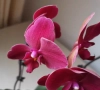
How should you deal with the flower spike of a Phalaenopsis orchid after it finishes blooming? Should you cut it off?
After the blooming period of a Phalaenopsis orchid ends, handling the flower spike and the follow-up care is a technical job. Cut it the right way and it can bloom again; cut it the wrong way and you may end up waiting a whole year in vain. Here are some suggestions. I. Flower spike pruning options 1. Short-term bloom-promoting pruning If you hope for a repeat bloom in the short term, you can keep the healthy stem section on the upper half of the flower spike and cut at the second-to-last
-

What does "semi-mature seedling" mean for Phalaenopsis, and how should it be cared for?
In the cultivation of Phalaenopsis, the "semi-mature seedling" is a key stage. So what exactly does semi-mature Phalaenopsis seedling mean? And how should it be carefully cared for? A semi-mature Phalaenopsis seedling refers to a plant that has passed the seedling stage and has a certain growth foundation in both morphology and physiology, but has not yet fully reached the mature
-

Causes of Foul Odor from Phalaenopsis Leaves and How to Deal With Them
As a widely popular ornamental flower, the Phalaenopsis (moth orchid) is often a delight to the eye with its elegant bearing and brilliant colors. However, during care, we sometimes find that its leaves give off an unpleasant foul odor, which not only affects the viewing experience but may also signal a health problem in the plant. So, wh
-
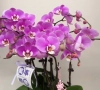
Why Phalaenopsis Orchid Petals Turn Transparent and How to Fix It
When a Phalaenopsis orchid develops green-tinged petal edges and thin, transparent texture, this is a normal sign of natural flower aging, as explained below. 1. A signal that the blooming period is ending 1. Chlorophyll becomes visible: cell aging causes chlorophyll to show through, producing a pale green tinge along the edges of white or light-colored petals; dark-colored varieties first fade in color, then gradually
条件筛选