-

Methods for Skillfully Applying Foliar Fertilizer to Tea Plants to Improve Quality
If famous tea is contaminated, especially export products, its output value and reputation will suffer serious damage. To improve tea quality and yield, in addition to measures such as growing green manure in tea gardens, mulching to retain moisture, applying sufficient farmyard manure after each harvest, and improving tea-making techniques, foliar fertilizer should also be used skillfully. This is a good method that uses a small amount of fertilizer, takes effect quickly, and yields high returns, generally increasing yield by 20%-30% or more. The techniques are: Fertilization timing. When the new shoots of each round of tea in spring, summer, and autumn sprout and grow to the stage of one bud and one initial leaf, choose a windless sunny day at early morning, evening, or on a cloudy day for spraying, once a week for 2-3 consecutive sprays. Spray until water drips from the leaf surface. Fertilizer ratio. Mainly nitrogen, phosphorus, and potassium, supplemented by micronutrient fertilizers, with a ratio of 4:1:1. Micronutrient fertilizers are proportioned according to the principle of supplementing whatever the tea plant lacks. Fertilization concentration. The fertilization concentration is related to the fertilizer variety and weather conditions. According to experiments, urea is 0.5%, superphosphate 1%, potassium sulfate 0.5%, zinc sulfate 50-100 ppm, and ferric molybdate 20-50 ppm. If the concentration is too high, fertilizer damage is likely to occur; otherwise, it will not be effective. Combination with multiple substances. It can be combined with pest control, sprinkler irrigation, and plant growth regulators, saving labor and making mechanized operation easier to achieve. Chemical properties of fertilizers and pesticides. Acidic fertilizers should be combined with acidic pesticides, and alkaline fertilizers with alkaline pesticides, so as not to produce chemical reactions or precipitates, preventing mutual cancellation of fertilizer and pesticide efficacy. Use biological pesticides to control pests and diseases. Using biological pesticides to control tea plant pests and diseases is the best choice, as it is safe, reliable, pollution-free, and harmless, with low cost and high control efficacy, such as Bt emulsion, Bacillus thuringiensis, Beauveria bassiana, agricultural antibiotics, and plant antibiotics.
-
What are the behaviors and habits of dogs? A full guide in one article
①Dogs are carnivores, so when feeding them, the diet needs to contain a relatively large amount of animal protein and fat, supplemented with plant-based ingredients, to ensure the dog's normal development and a healthy body. ②The dog's digestive tract is shorter than that of herbivores, the hydrochloric acid content in a dog's stomach ranks first among domestic animals, and in addition the intestinal wall is thick and its absorption capacity is strong, so it easily and suitably digests meat foods. ③Dogs belong to the wolf family, and when eating they do not chew much, one might say they "wolf it down." This reminds us to feed less
-
How to skillfully manage late-season wheat? These technical points must be mastered
Ensure sufficient soil moisture and base fertilizer. For late-season wheat, never rush to sow by seizing moisture; on the premise of ensuring adequate soil moisture, apply heavy base fertilizer, and where conditions permit, apply 3-5 cubic meters of high-quality farmyard manure per mu; at the same time, according to yield requirements, mix 2/3 of the total nitrogen, phosphorus and potassium chemical fertilizers invested throughout the growth period with farmyard manure, spread them on the surface and plow them into the soil. Choose the right variety and increase the seeding rate. Late-season wheat is suitable for semi-winter varieties, which can be selected according to local conditions. At the same time, determine the actual number of days of late sowing according to local autumn temperatures. Generally, it is advisable to increase the seeding rate by 0.5 kg for each day of delayed sowing, and never
-
What to Do When Wheat Seedlings Show Abnormal Leaf Color? A Full Analysis of Causes and Solutions
After wheat is sown and the seedlings emerge, various abnormal discolored seedlings often form due to the influence of natural conditions and cultivation practices. To make it easier to manage according to the specific seedling condition and the specific cause, they are introduced separately below: Yellow-leaf seedlings - the causes of yellowing of wheat leaves. First, soil drought. This situation mostly occurs in wheat fields with insufficient subsoil moisture or where moisture escapes through cracks. Its characteristics are: tillers emerge slowly, leaf color is grayish green, the central leaf is short and small, growth is slow or stagnant (people call this "shrunken-heart seedlings"), the middle and lower leaves gradually turn yellow and dry up, and roots are few and fine. Management
-
-
How is dried small shrimp processed? A full analysis of dried small shrimp processing technology
Main raw materials: Acetes shrimp, table salt, etc. Equipment and tools: iron wok, baskets, flow-through stove. Production method: Grade and sort the Acetes shrimp; those containing more impurities should be sifted with a sieve; if the raw materials are not clean, they should be washed, and after washing, place them in baskets to drain, with each basket holding about 6 kg of Acetes shrimp. The following methods can be used for cooking: ① Basket-rotating cooking method. That is, fill a large iron wok with a diameter of 90 cm seven-tenths full with fresh water, add 2 kg of table salt, and after bringing to a boil, sprinkle an appropriate amount of table salt onto the shrimp basket after the shrimp have been placed in the basket and drained
-
Golden Star Yellow Umbrella Mushroom Successfully Cultivated Artificially in Jiangxi
Recently, fresh "Golden Star Yellow Umbrella" mushrooms were successfully cultivated artificially in Shicheng County, Jiangxi Province, and quickly became a new favorite in local residents' "vegetable baskets," selling out rapidly after hitting the market. The "Golden Star Yellow Umbrella" mushroom originally had no history of artificial cultivation and is also quite rare growing naturally in the wild. Luo Yijin, a farmer from Taohua Village in the Yangdi area of Hengjiang Town in the county, accidentally discovered wild "Golden Star Yellow Umbrella" mushrooms during an operation deep in the mountains. After picking the mushrooms and bringing them home, Luo Yijin began actively practicing and boldly exploring artificial cultivation methods for them.
-
Detailed Guide to Tea Tree Mushroom Cultivation: A Full Analysis of Key Planting Techniques
Tea tree mushroom, also known as the tea plant mushroom, is a rare, precious and delicious edible fungus. Its caps are tender and its stems crisp, with a mellow, delicate fragrance and excellent texture, and it can be cooked into all kinds of delicious dishes. According to testing by the China Food Quality Supervision and Inspection Center, the fruiting bodies contain important nutrients such as glucose, fungal protein and minerals, and include all eight amino acids needed by the human body, among which lysine content is as high as 1.75%. It also has strong kidney-tonifying effects and antitumor activity, making it one of the top ten best-selling mushrooms on the international mushroom trading market, known as the "Chinese divine mushroom." In Japan, Singapore,
-
Detailed Explanation of Full-Course Immunity and Health Care Technology for Commercial Pigs
In recent years, infectious diseases in pigs have increased, conditions have become complex, treatment has become difficult, and mortality rates have risen. In particular, the highly pathogenic blue ear disease (highly pathogenic PRRS) that occurred in 2006 swept across half of China within six months, causing severe losses to China's pig industry. Many farmers lost everything and were ruined. Under this situation of high disease incidence, it is very important to do a good job in pig immunity and health care and to take preventive measures. Many farmers who have newly joined the breeding industry also do not know how to carry out vaccine immunization and medication-based health care. Below is a discussion of: vaccine and medication immunity and health care technology for pigs.1
-
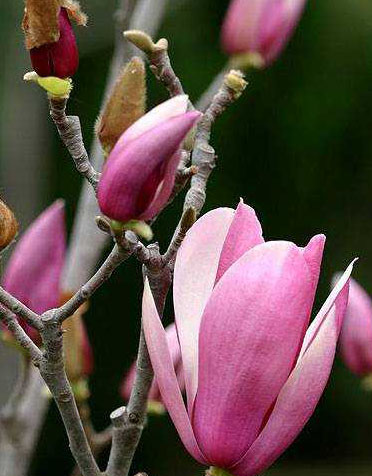
How to plant Magnolia liliiflora? A full analysis of scientific cultivation techniques
1. Soil. You can mix leaf mold and garden soil in equal amounts as the growing medium, and add 50-150 grams of bone meal or NPK compound fertilizer to the soil. The pot should be slightly deeper and larger, and put some broken hard plastic foam blocks at the bottom of the pot to enhance air permeability and drainage and prevent root rot. Repot and change the soil once every year or every other year after flowering
条件筛选