-

Disease- and pest-resistant japonica rice successfully bred in Jiangsu
A breakthrough has been achieved in the "Breeding of New Multi-Resistant, High-Yield and High-Quality Japonica Rice Varieties" carried out through cooperation between the Bokun Agricultural Research Institute of Yixing City, Jiangsu Province, and the China National Rice Research Institute and other institutions. New high-yield, high-quality japonica rice lines such as 4701 and 4714 have been successfully bred with resistance to brown planthopper, rice blast and other pests and diseases. It is reported that the bred high-yield, high-quality japonica rice lines combine genes for resistance to brown planthopper, white-backed planthopper, rice blast and stripe leaf blight, as well as specific genes for high yield and high quality. Testing has shown that these high-quality japonica rice lines are resistant to brown planthopper,
-
How to grow foxtail millet? A full analysis of the key planting techniques
Foxtail millet prefers warmth and has strong adaptability; it withstands both drought and poor soil, and is not afraid of acid or alkaline conditions. It is grown in the arid and poor mountainous areas of both northern and southern China. Planting key points: (1) It should not be planted in continuous cropping; continuous cropping leads to severe disease and many weeds, so rational crop rotation is essential. (2) In spring, do a good job of harrowing, shallow plowing and rolling to preserve soil moisture, ensuring the water needed for foxtail millet germination and emergence. (3) Apply base fertilizer once before sowing in combination with plowing, mainly farmyard manure; the application rate per mu: for high-yield fields, 5000-7000 kg is suitable; for medium-yield fields, 1500-4000 kg; mix phosphate fertilizer
-
How to Safely Transport Live Fish? A Full Breakdown of Practical Methods
1. Sealed transport: Sealed transport places the fish and water in a sealed, oxygen-filled container for transport. Its characteristics are small volume and easy portability; for general adult fish transport, within 8 hours there is no need to change the water midway, the seal is tight, and the survival rate is high. A single oxygen fill can keep fry alive in the container for more than 20 hours, and it is even more convenient for long-distance transport of large quantities of fry and fingerlings. Methods such as oxygen-filled sealed transport in plastic bags and oxygen-filled sealed transport in plastic buckets can be used. 1. Oxygen-filled sealed transport in plastic bags: Fill the plastic bag with clean clear water, with the water volume accounting for 1/3 of the bag's total capacity
-
How to prevent and treat porcine epidemic diarrhea? A full analysis of practical methods
In early 2008 the weather in southern China was severely cold, and on some pig farms in Yangjiang, Jiangmen and other places in Guangdong Province, pigs developed yellow or gray watery diarrhea, especially piglets, accompanied by vomiting, severe dehydration, death and other symptoms, causing serious losses to the farms. Through clinical diagnosis, laboratory testing and other methods, veterinary workers determined that the disease occurring in these two places was porcine epidemic diarrhea. Porcine epidemic diarrhea mostly occurs in the cold winter season from December to February of the following year, and pigs of all ages can be infected and develop the disease. The infection rate in suckling piglets, weaned piglets and fattening pigs is 1
-
How are vesicular diseases in pigs diagnosed? A full analysis of methods and key points
Common vesicular diseases in pigs include foot-and-mouth disease, swine vesicular disease, vesicular exanthema of swine and vesicular stomatitis, all mainly characterized by vesicles on the mouth, hooves and other parts. Clinically, attention should be paid to distinguishing them and treating them according to the symptoms. 1. Foot-and-mouth disease. It affects a variety of animals, mainly even-toed ungulates, and humans can also be infected. Cattle are susceptible, followed by pigs, then sheep, goats and camels, and young animals are susceptible. The sources of infection are diseased animals and virus-carrying animals, and the transmission routes are the respiratory tract, digestive tract and wounds, etc. The epidemic has no seasonality, but occurs more often in winter and spring.
-

A detailed guide to kapok grafting propagation techniques, with a full breakdown of methods and steps
Kapok grafting propagation techniques
-

How to Propagate Hibiscus? A Full Analysis of Common Methods and Techniques
How to Propagate Hibiscus
-

What conditions are needed for cherry cultivation? A full analysis of growing requirements
Cherry cultivation conditions
-

Premier Su Tseng-chang instructs full implementation of epidemic prevention, supplementing inspection equipment and manpower
To implement African swine fever prevention, Premier Su Tseng-chang, upon taking office yesterday (the 14th), immediately went to Taoyuan International Airport to inspect border measures against African swine fever and to encourage the working team members. Premier Su Tseng-chang at...
-
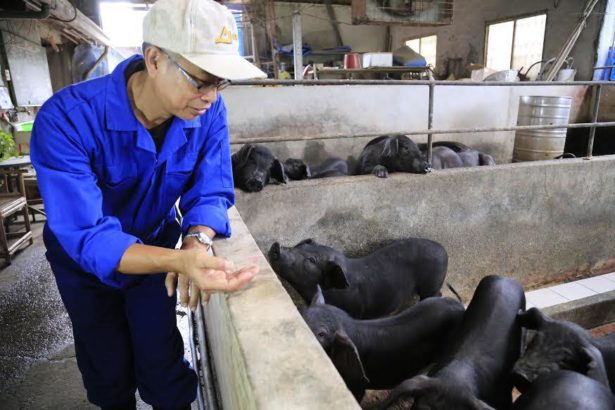
The Battle Over Epidemic Prevention and Food Waste 02"Pig Farmers' Civil War: Feeding Food Waste to Pigs Is High-Risk and Outdated VS Food Waste Can Be Sorted More Carefully in Addition to High-Temperature Boiling
The Battle Over Epidemic Prevention and Food Waste 02"Pig Farmers' Civil War: Feeding Food Waste to Pigs Is High-Risk and Outdated VS Food Waste Can Be Sorted More Carefully in Addition to High-Temperature Boiling
条件筛选