-

How to skillfully manage late-season wheat? These technical points must be mastered
Ensure sufficient soil moisture and base fertilizer. For late-season wheat, never rush to sow by seizing moisture; on the premise of ensuring adequate soil moisture, apply heavy base fertilizer, and where conditions permit, apply 3-5 cubic meters of high-quality farmyard manure per mu; at the same time, according to yield requirements, mix 2/3 of the total nitrogen, phosphorus and potassium chemical fertilizers invested throughout the growth period with farmyard manure, spread them on the surface and plow them into the soil. Choose the right variety and increase the seeding rate. Late-season wheat is suitable for semi-winter varieties, which can be selected according to local conditions. At the same time, determine the actual number of days of late sowing according to local autumn temperatures. Generally, it is advisable to increase the seeding rate by 0.5 kg for each day of delayed sowing, and never
-
What are the behaviors and habits of dogs? A full guide in one article
①Dogs are carnivores, so when feeding them, the diet needs to contain a relatively large amount of animal protein and fat, supplemented with plant-based ingredients, to ensure the dog's normal development and a healthy body. ②The dog's digestive tract is shorter than that of herbivores, the hydrochloric acid content in a dog's stomach ranks first among domestic animals, and in addition the intestinal wall is thick and its absorption capacity is strong, so it easily and suitably digests meat foods. ③Dogs belong to the wolf family, and when eating they do not chew much, one might say they "wolf it down." This reminds us to feed less
-
Methods for Skillfully Applying Foliar Fertilizer to Tea Plants to Improve Quality
If famous tea is contaminated, especially export products, its output value and reputation will suffer serious damage. To improve tea quality and yield, in addition to measures such as growing green manure in tea gardens, mulching to retain moisture, applying sufficient farmyard manure after each harvest, and improving tea-making techniques, foliar fertilizer should also be used skillfully. This is a good method that uses a small amount of fertilizer, takes effect quickly, and yields high returns, generally increasing yield by 20%-30% or more. The techniques are: Fertilization timing. When the new shoots of each round of tea in spring, summer, and autumn sprout and grow to the stage of one bud and one initial leaf, choose a windless sunny day at early morning, evening, or on a cloudy day for spraying, once a week for 2-3 consecutive sprays. Spray until water drips from the leaf surface. Fertilizer ratio. Mainly nitrogen, phosphorus, and potassium, supplemented by micronutrient fertilizers, with a ratio of 4:1:1. Micronutrient fertilizers are proportioned according to the principle of supplementing whatever the tea plant lacks. Fertilization concentration. The fertilization concentration is related to the fertilizer variety and weather conditions. According to experiments, urea is 0.5%, superphosphate 1%, potassium sulfate 0.5%, zinc sulfate 50-100 ppm, and ferric molybdate 20-50 ppm. If the concentration is too high, fertilizer damage is likely to occur; otherwise, it will not be effective. Combination with multiple substances. It can be combined with pest control, sprinkler irrigation, and plant growth regulators, saving labor and making mechanized operation easier to achieve. Chemical properties of fertilizers and pesticides. Acidic fertilizers should be combined with acidic pesticides, and alkaline fertilizers with alkaline pesticides, so as not to produce chemical reactions or precipitates, preventing mutual cancellation of fertilizer and pesticide efficacy. Use biological pesticides to control pests and diseases. Using biological pesticides to control tea plant pests and diseases is the best choice, as it is safe, reliable, pollution-free, and harmless, with low cost and high control efficacy, such as Bt emulsion, Bacillus thuringiensis, Beauveria bassiana, agricultural antibiotics, and plant antibiotics.
-
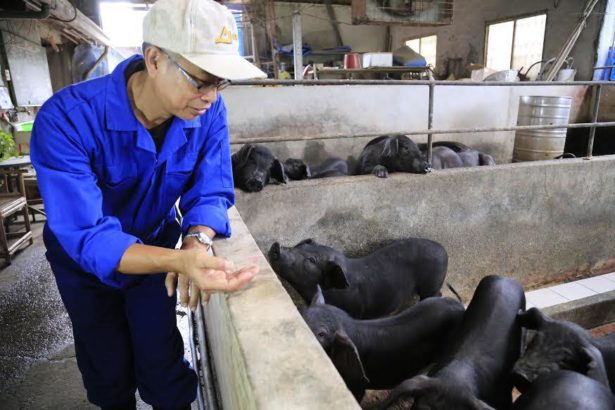
The Battle Over Epidemic Prevention and Food Waste 02"Pig Farmers' Civil War: Feeding Food Waste to Pigs Is High-Risk and Outdated VS Food Waste Can Be Sorted More Carefully in Addition to High-Temperature Boiling
The Battle Over Epidemic Prevention and Food Waste 02"Pig Farmers' Civil War: Feeding Food Waste to Pigs Is High-Risk and Outdated VS Food Waste Can Be Sorted More Carefully in Addition to High-Temperature Boiling
-

Premier Su Tseng-chang instructs full implementation of epidemic prevention, supplementing inspection equipment and manpower
To implement African swine fever prevention, Premier Su Tseng-chang, upon taking office yesterday (the 14th), immediately went to Taoyuan International Airport to inspect border measures against African swine fever and to encourage the working team members. Premier Su Tseng-chang at...
-

What conditions are needed for cherry cultivation? A full analysis of growing requirements
Cherry cultivation conditions
-

How to Propagate Hibiscus? A Full Analysis of Common Methods and Techniques
How to Propagate Hibiscus
-

A detailed guide to kapok grafting propagation techniques, with a full breakdown of methods and steps
Kapok grafting propagation techniques
-
How are vesicular diseases in pigs diagnosed? A full analysis of methods and key points
Common vesicular diseases in pigs include foot-and-mouth disease, swine vesicular disease, vesicular exanthema of swine and vesicular stomatitis, all mainly characterized by vesicles on the mouth, hooves and other parts. Clinically, attention should be paid to distinguishing them and treating them according to the symptoms. 1. Foot-and-mouth disease. It affects a variety of animals, mainly even-toed ungulates, and humans can also be infected. Cattle are susceptible, followed by pigs, then sheep, goats and camels, and young animals are susceptible. The sources of infection are diseased animals and virus-carrying animals, and the transmission routes are the respiratory tract, digestive tract and wounds, etc. The epidemic has no seasonality, but occurs more often in winter and spring.
-
How to prevent and treat porcine epidemic diarrhea? A full analysis of practical methods
In early 2008 the weather in southern China was severely cold, and on some pig farms in Yangjiang, Jiangmen and other places in Guangdong Province, pigs developed yellow or gray watery diarrhea, especially piglets, accompanied by vomiting, severe dehydration, death and other symptoms, causing serious losses to the farms. Through clinical diagnosis, laboratory testing and other methods, veterinary workers determined that the disease occurring in these two places was porcine epidemic diarrhea. Porcine epidemic diarrhea mostly occurs in the cold winter season from December to February of the following year, and pigs of all ages can be infected and develop the disease. The infection rate in suckling piglets, weaned piglets and fattening pigs is 1
条件筛选