-

What are the precautions for watering orchids? Keep these points in mind
First, pay attention to water temperature. In winter, do not water with cold water; the water temperature should be close to room temperature, with 8-10°C being ideal. In summer, do not water with hot water. If water is stored in a water tank, be careful to prevent excessively high water temperature from damaging the orchid plants and orchid roots. The water temperature must not exceed 25-28°C, and do not suddenly water with cold water, so as not to damage the orchid plants. Second, pay attention to...
-
How to mix orchid potting medium? Sharing practical small formulas
Potting medium is the material foundation on which orchids depend for survival, and it is also one of the factors that promotes more shoots, vigorous roots and strong seedlings. Below are several formulas that the author has repeatedly tested and verified as suitable for different orchids. Formula one: 70% shiitake soil, 20% rice husk charcoal, 10% coarse river sand, plus an additional 10% bone charcoal (this formula is suitable for planting Cymbidium goeringii and Cymbidium faberi).
-
Cultivation and Management Methods and Technical Key Points for Cymbidium tortisepalum
1. Pot selection The traditional cultivation of Cymbidium tortisepalum in the western Yunnan area usually uses a black waist-drum-shaped clay pot. The pot height is 35-45cm, the waist diameter is 30-35cm, and the pot opening is slightly smaller. This kind of pot has a thin texture and good water seepage and air permeability. Cymbidium tortisepalum plants are tall, and their root systems are especially well developed and thick. The root length of well-grown plants can reach 35-40...
-
Cultivation Techniques and Care Management Essentials for Cymbidium ensifolium
Cymbidium ensifolium, commonly known as the Four Seasons Orchid, is a member of the Chinese orchid family and has a long history of cultivation in our country. Its merits of being enjoyed both for its flowers and its foliage have made Cymbidium ensifolium widely favored by orchid growers and enthusiasts throughout the ages. The process of artificial large-scale cultivation of Cymbidium ensifolium requires tissue-culture seedling propagation before it can enter the stages of small seedling, medium seedling, and commercial seedling cultivation... ⟦3 Cymbidium ensifolium, commonly known as the Four Seasons Orchid, is a member of the Chinese orchid family and has a long history of cultivation in our country. Its merits of being enjoyed both for its flowers and its foliage have made Cymbidium ensifolium widely favored by orchid growers and enthusiasts throughout the ages. The process of artificial large-scale cultivation of Cymbidium ensifolium requires tissue-culture seedling propagation before it can enter the cultivation stages of small seedlings, medium seedlings, and commercial seedlings; during cultivation, there are many finer points to observe in technical aspects such as the water quality used for irrigation, the method of watering, and pest and disease control. This episode introduces the cultivation techniques for Cymbidium ensifolium.
-
A Complete Analysis of Leaf Identification Methods for Chengmei Orchid
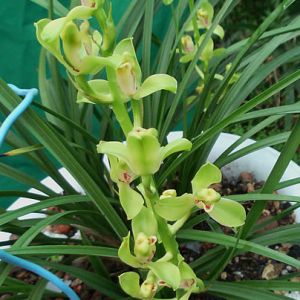
Origin: Collected from the wild in Hubei in 2001. Leaf posture: slanting upright, medium-wide. Flower appearance: outer tepals diamond-shaped and lively, petal tips slightly tilted backward, semi-hard column, small ruyi tongue, standing out from traditional varieties with a distinctive taste.
-
Cultivation Methods and Precautions for the Shengshi Mudan Chunlan
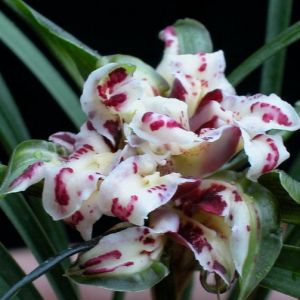
A rare Cymbidium goeringii flower, collected in the mountains of Guizhou in February 2002. It bloomed again in February 2005, with a peony flower form and as many as 15 lip petals. It won a gold award at the Zhejiang Province (2005) Cross-Strait Orchid Exposition, and also won a gold award at the 7th Zhejiang Province (Linhai) Orchid Exposition. It is an extremely rare and precious treasure among Cymbidium goeringii rare flowers to date!...
-
Ten Aspects of Orchid Appreciation: Ten Key Points for Judging the Quality of Orchids
The appreciation of Chinese orchids by our people has gone through a development process from enjoying the fragrance, to viewing the flowers, to observing the leaves, and to appreciating the "art" variations. The traditional love of orchids was mainly centered on enjoying their fragrance. The ancients held orchid fragrance in the highest esteem, calling it "national fragrance," "fragrance of kings," and "the finest fragrance under heaven." The fragrance of orchids differs from other fragrances: it comes and goes, appears and disappears, seems near and then far, mysterious and unfathomable. An ancient poem says: "I cultivated orchid buds for two or three years; with warm sun and gentle breeze they bloomed one after another. Sitting long, I forgot the fragrance was in the room; opening the window, butterflies sometimes flew in." This is a vivid description of orchid fragrance. Besides fragrance, the noble and elegant character of orchids, not competing with peaches and plums for brilliance, not changing color because of frost and snow, is also deeply loved by our people. In particular, the pure white "plain heart" flower is regarded as the foremost among all orchids, representing the so-called "character of a gentleman." Beyond enjoying fragrance and observing color, there is also emphasis on petal type, requiring the flower shape to have spiritual charm. For example, when the two lateral sepals of an orchid are arranged horizontally in a "single-character shoulder," it has traditionally been regarded as an excellent variety. If the lip is tightly pressed below the column, slightly revealed but not extended, it can be called a top-grade variety.
-
Characteristics and Care Guide for the Liancheng Caimei Cold-Growing Orchid Variety
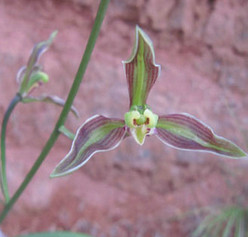
Liancheng Caimei was selected in 2003 by Ms. Yang Xianjin of the Liancheng Pengxing Orchid Nursery from ordinary orchids collected from Meihua Mountain. The plant has an elegant form with medium-fine leaves, blooms around October, and has tall flower stalks that rise well above the foliage. The flower colors are a vivid red and fresh green, with brilliant, multicolored hues. Overall, the flowers appear very dignified and graceful, making it a rare and precious cold-growing orchid variety seldom seen in the orchid world until now,...
-
Management Methods and Technical Key Points for Cymbidium tortisepalum During the Flowering Period
1. Use a clay pot with good air permeability; if no clay pot is available, a thin-walled porous plastic pot will also do. The key is that it absorbs heat well and allows air to pass through quickly. 2. Mix orchid growing medium in a combined formula. The ideal state for orchid growing medium is loose and spongy, moisture-retaining, free-draining and slightly acidic. The mountainous areas of western Yunnan are vast and rich in humus soil. This soil is loose and spongy, moisture-retaining, free-draining...
-
What are the prevention and control methods for orchid stem rot?
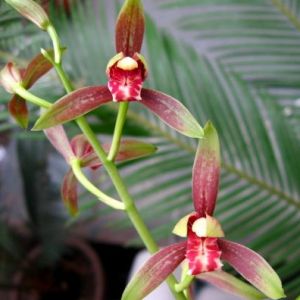
The color flower "Half-Gram Red" from Rong County usually blooms with only a "half" red, so orchid growers in Rong County call it "Half-Gram Red". Most of the seedlings were taken by the greenhouse and named "Flower-Heart Radish".
条件筛选