-

Detailed Explanation of the Development Method and Production Process of Oyster Mushroom Yogurt
Oyster mushroom is an edible fungus that is easy to cultivate, has high yield, and is deeply loved by the general public. Oyster mushroom has tender flesh, a delicious taste, and rich nutrition. Every 100g of dried mushroom contains 23-28g of protein and 1.42-2.87g of fat; the protein contains 18 kinds of amino acids, and the 8 essential amino acids for the human body and 2 semi-essential amino acids (arginine, histidine) account for about 40-50% of the total amino acid content. It also contains trace elements such as phosphorus, potassium, iron, zinc, and copper, as well as rich Vc. Oyster mushroom has very high medicinal value
-
What are the prospects for developing and utilising the resources of silvervine actinidia?
China is rich in kiwifruit resources and has a long history of cultivation, but these are mainly concentrated in the south. The kiwifruit species produced in Northeast China are mainly three: silvervine actinidia (Actinidia polygama Planch), hardy kiwifruit (A. arguta Planch) and kolomikta vine (A. kolomikta Maxim). Judging from the current propagation, cultivation and utilisation of Northeast China kiwifruit, relevant research is lacking; hardy kiwifruit and kolomikta vine have been introduced and planted sporadically in China, with no successful experience yet
-
A Complete Analysis of the Tea Plant's Total Development Cycle, Explained in One Article
The entire life period of a tea plant, from seed germination all the way to aging and death. According to the growth and development characteristics of the tea plant, it can be divided into four biological age stages, namely: seedling stage, young stage, mature stage, and aging stage. Seedling stage: from seed germination and the emergence of seedlings above ground to the end of the first growth when a resting bud forms, this is the seedling stage. Generally, it starts from seed germination in March of that year and ends in July, totaling about 4 to 5 months. During the seedling stage, attention should be paid to keeping the soil loose and moist so that seed germination can obtain sufficient air
-
What Are the Prospects for Gastrodia? Market Conditions and Development Potential Analysis
Question: What are the development prospects for Gastrodia? Answer: This is a question most enquirers care about. Simply put, Gastrodia, as a precious Chinese medicinal herb, has gone from wild harvesting to artificial cultivation, and from a yield of only 3 kg per unit area to more than 20 kg today; overall output has increased several hundredfold, yet the market remains tight. This shows at least three things: First, Gastrodia has moved from purely medicinal use into the ranks of health products, and the development and application market for health products is huge with unlimited potential. The hot sales of Gastrodia tea and Gastrodia drinks have opened up deep-processing channels for Gastrodia and absorbed
-
How should Gastrodia elata production develop? An analysis of development ideas and countermeasures
1. Current market conditions. Because the Gastrodia elata cultivation area increased substantially in the previous two years, and because cultivation techniques improved, total Gastrodia elata output has more than doubled compared with 3 years ago; in the Gastrodia elata production and sales market, on the one hand output has risen sharply, but on the other hand, because the increase in processing for medicinal use (patent medicines) has been relatively small, the market is currently in a sluggish state. The Gastrodia elata market is similar to other traditional Chinese medicinal herb markets, generally with a "market cycle" of 3-5 years, so waiting until the Gastrodia elata market picks up before carrying out sexual breeding is not feasible; if even the seed tubers are disposed of now
-
Garlic Harvester Successfully Developed in Chengwu, Shandong
The garlic planting area in Chengwu County has remained stable at 400,000 mu, and garlic harvesting has always relied on manual digging, which is highly labor-intensive and inefficient. In order to reduce the burden on farmers, engineer Qin Zhongliang of Dachi Group, after years of effort, finally developed a garlic harvester suited to the county's planting characteristics. The product features high harvesting efficiency, good harvesting quality, no damage to the garlic, no rotting of the garlic, no damage to intercropped crops, and easy operation. It can shovel two rows of garlic out from the roots at one time, after which the garlic is picked up by hand. Each person can harvest
-
Analysis of the Current State of Snakehead Farming and Interpretation of Its Future Development Prospects
People customarily refer to fish of the family Channidae collectively as snakehead, blackfish, caiyu, shengyu, and so on. The snakehead (Channa argus) is the most widely distributed and highest-yielding species among the Channidae. As market demand grows, the snakehead may become one of the most promising aquaculture species in China in the early 21st century. China has a total of 7 species of Channidae, namely the snakehead (Channa argus), the spotted snakehead (Channa maculata), the dwarf snakehead (Channa asiatica), the broad-headed snakehead (Channa gachua), the striated snakehead (Channa striata), the slender snakehead (Channa limbata) and the elongated snakehead (Channa elongata). Among them, only the snakehead is a widespread species, distributed across all the major river systems of the country and also the highest in yield, while the spotted snakehead, the dwarf snakehead and the broad-headed snakehead are distributed only in South
-
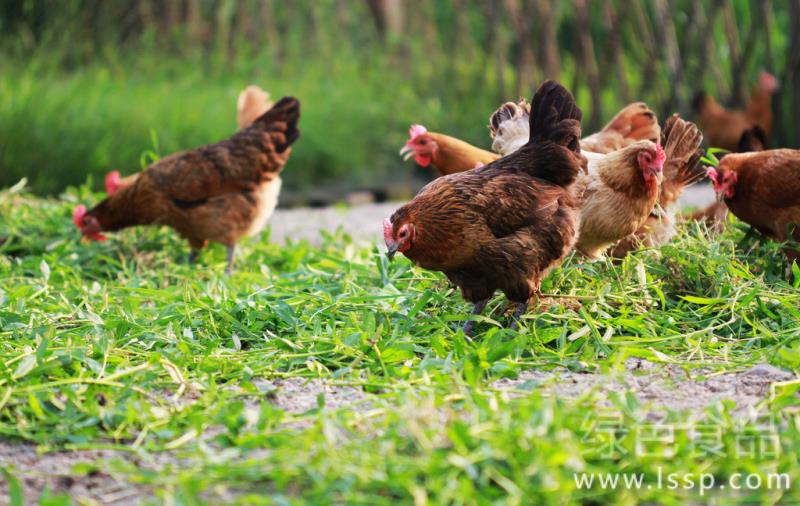
Feeding green fodder to chickens can promote growth and development, but what precautions should be taken?
Green fodder promotes chicken growth and development; precautions for feeding green fodder to chickens
-
Material-free Gastrodia Cultivation Technology Successfully Developed in Guizhou
The fragile ecological environment of western China urgently needs protection, yet impoverished westerners urgently need to cut trees to cultivate Gastrodia to escape poverty, thus environmental protection and moderate prosperity have become a difficult contradiction. Now, with the maturing and promotion of the material-free Gastrodia cultivation technology by Yunlong Gastrodia Development Co., Ltd. in Dafang County, Guizhou Province, this contradiction has been readily resolved. Dafang County is located in the northwest of Guizhou Province. Due to its unique geographical environment and climatic conditions, the Gastrodia produced in Dafang is large in size, transparent in texture, and its gastrodin content and beneficial trace elements such as molybdenum, chromium, rubidium, cobalt, and copper are far
-
Why does the golden boxwood develop yellow leaves?
Golden boxwood Buxus sempervirens 'Latifolia Maculata' belongs to the Buxaceae family, Buxus genus. It is an evergreen shrub, 30-40 cm tall, with a compact form; the new leaves are bright yellow, and when mature they turn dark green with yellow spots, glossy. It is cold-resistant and shade-tolerant, suitable for loose and fertile soil, and can also grow in alkaline soil. It has low water requirements and only needs to keep the soil half-moist. It is relatively resistant to toxic gases such as sulfur dioxide, chlorine, hydrogen sulfide, and hydrogen fluoride. This species is a cultivated species, and in
条件筛选