-

What effects does waterlogging damage have on the growth and development of tea plants?
Tea plants require moist air conditions, but they are not tolerant of excessively wet soil. When there is too much soil moisture or even standing water on the ground, the respiration of the root system is impeded, and its ability to absorb water and nutrients is reduced, seriously affecting the growth of buds and leaves and lowering the yield and quality of fresh leaves. In severe cases, the roots suffocate, anaerobic microorganisms become active, and organic acids are produced that poison the tea plant roots, causing peeling, necrosis and rot. The manifestations of tea plants suffering from waterlogging damage are: few absorbing roots, short and small lateral roots, a shallow root layer, and some lateral roots extending horizontally rather than downward, or even growing upward. Severely affected
-
Biological agents developed for pest and disease control throughout the goji growing season
With the creation of 4 compound pure biological agents formulated by the "Research on Biological Control Technology for Major Goji Pests and Diseases" team at the Institute of Plant Protection of the Ningxia Academy of Agriculture and Forestry Sciences, the pests and diseases constraining the development of Ningxia's goji industry have finally met their greatest "natural enemy." The use of these agents will achieve biological control of pests and diseases throughout the entire goji growing season, not only reducing the number of control applications but also improving goji quality. Goji is a traditional medicinal herb cultivated in Ningxia and is also a leading industry designated by the autonomous region's Party committee and government. However, the occurrence of goji pests and diseases is extremely complex,
-
A Complete Analysis of the Tea Plant's Total Development Cycle, Explained in One Article
The entire life period of a tea plant, from seed germination all the way to aging and death. According to the growth and development characteristics of the tea plant, it can be divided into four biological age stages, namely: seedling stage, young stage, mature stage, and aging stage. Seedling stage: from seed germination and the emergence of seedlings above ground to the end of the first growth when a resting bud forms, this is the seedling stage. Generally, it starts from seed germination in March of that year and ends in July, totaling about 4 to 5 months. During the seedling stage, attention should be paid to keeping the soil loose and moist so that seed germination can obtain sufficient air
-
How should Gastrodia elata production develop? An analysis of development ideas and countermeasures
1. Current market conditions. Because the Gastrodia elata cultivation area increased substantially in the previous two years, and because cultivation techniques improved, total Gastrodia elata output has more than doubled compared with 3 years ago; in the Gastrodia elata production and sales market, on the one hand output has risen sharply, but on the other hand, because the increase in processing for medicinal use (patent medicines) has been relatively small, the market is currently in a sluggish state. The Gastrodia elata market is similar to other traditional Chinese medicinal herb markets, generally with a "market cycle" of 3-5 years, so waiting until the Gastrodia elata market picks up before carrying out sexual breeding is not feasible; if even the seed tubers are disposed of now
-
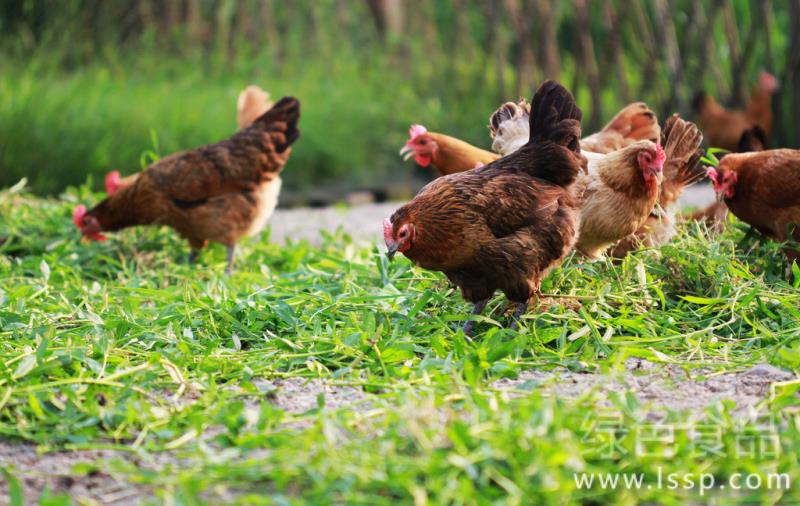
Feeding green fodder to chickens can promote growth and development, but what precautions should be taken?
Green fodder promotes chicken growth and development; precautions for feeding green fodder to chickens
-
Material-free Gastrodia Cultivation Technology Successfully Developed in Guizhou
The fragile ecological environment of western China urgently needs protection, yet impoverished westerners urgently need to cut trees to cultivate Gastrodia to escape poverty, thus environmental protection and moderate prosperity have become a difficult contradiction. Now, with the maturing and promotion of the material-free Gastrodia cultivation technology by Yunlong Gastrodia Development Co., Ltd. in Dafang County, Guizhou Province, this contradiction has been readily resolved. Dafang County is located in the northwest of Guizhou Province. Due to its unique geographical environment and climatic conditions, the Gastrodia produced in Dafang is large in size, transparent in texture, and its gastrodin content and beneficial trace elements such as molybdenum, chromium, rubidium, cobalt, and copper are far
-
What to do when cotton develops red leaf blight during the boll-setting stage
Control measures for cotton red leaf blight: 1. Apply fertilizer reasonably, and skillfully apply the cotton topping fertilizer; nitrogen, phosphorus and potassium should be applied together or foliar fertilizer should be applied. 2. Strengthen field management, cultivate frequently, improve root respiration conditions, promote root development, prune and remove side branches in time, remove old leaves and control pests and diseases. 3. Spray for protection, using 70% mancozeb or 75% chlorothalonil 600-800 times solution or 70% thiophanate-methyl 800-1000 times solution plus foliar fertilizer (potassium dihydrogen phosphate, Lvzhiyuan, etc.) for spraying, once every 5-
-
Current Production Status and Development Strategies of Nanguo Pear in Haicheng City
The Nanguo pear is a distinctive industry of the Haicheng region. With its advantages of moderate fruit size, bright color, delicate flesh, sweet-tart flavor, and rich, unique aroma, it can be called the darling of fruits and a wonder of the world, and is deeply welcomed by consumers all over the country. I. The flourishing Nanguo pear industry At present, Haicheng City has 20 towns (farms) and more than 300 villages cultivating Nanguo pears, with more than 200,000 people engaged in the Nanguo pear industry. The total area of Nanguo pears is more than 300,000 mu, the total number of trees is more than 10 million, the annual output is about 150,000 tons, and the output value is more than 450 million yuan
-
What to Do When Cattle and Sheep Develop Acute Bloat? A Detailed Guide to Emergency Measures
When cattle and sheep consume large amounts of peanut vines, pea vines, alfalfa, or other legume stems and leaves, or dew-covered grass, they are prone to developing acute gastrointestinal bloat. For severely affected animals, the first step should be to release gas and reduce pressure. After venting, inject vegetable oil or paraffin oil through the trocar opening: 20-40 ml for cattle and 10-15 ml for sheep; Lysol may also be injected: 15-20 ml for cattle and 5-10 ml for sheep. To stop fermentation of rumen contents, administer orally the clear supernatant of 10% quicklime water: 500-1500 ml for cattle and 100-50 for sheep
-
What are the prospects for snake farming? An introduction to the development prospects of snake farming
Because snakes have significant economic value, many people, directly driven by profit, have taken up professional snake catching as a trade to gain substantial economic benefits. Therefore, it is recommended that the relevant departments strictly crack down on and ban this destructive and predatory illegal behavior, and resolutely stop it. In this way, the sharp decline in the natural population of wild snakes can be reduced, in order to prevent severe damage to the ecological environment and cause even greater losses that harm future generations. Therefore, active and effective protection measures should be taken to promote the recovery and expansion of snake populations as quickly as possible in a short period of time, and restore the ecological balance necessary for humanity.
条件筛选