-

What to do when cotton develops red leaf blight during the boll-setting stage
Control measures for cotton red leaf blight: 1. Apply fertilizer reasonably, and skillfully apply the cotton topping fertilizer; nitrogen, phosphorus and potassium should be applied together or foliar fertilizer should be applied. 2. Strengthen field management, cultivate frequently, improve root respiration conditions, promote root development, prune and remove side branches in time, remove old leaves and control pests and diseases. 3. Spray for protection, using 70% mancozeb or 75% chlorothalonil 600-800 times solution or 70% thiophanate-methyl 800-1000 times solution plus foliar fertilizer (potassium dihydrogen phosphate, Lvzhiyuan, etc.) for spraying, once every 5-
-
Research and Development Progress of Functional Rice and Its Food Products
Functional rice refers to rice products that regulate human physiological functions, are suitable for consumption by the general population, and are not intended for the treatment of diseases. In addition to containing the seven major nutrients necessary for human growth and development - protein, fat, carbohydrates, vitamins, minerals, water and fiber - functional rice also contains certain special components that regulate and balance human physiological functions. It can enhance physiological defense mechanisms, prevent specific diseases, delay aging, and control physical strength and energy status. 1. Processing of functional rice
-
New upland rice variety developed in Shandong, agronomist Xu Defang successfully breeds it
In the golden autumn season, a new upland rice variety carefully cultivated over 3 years by Xu Defang, an agronomist at the Dongying Branch of the Shandong Academy of Agricultural Sciences, has achieved a bumper harvest. According to calculations, it yields more than double that of the current upland rice variety 297, with a yield of 600-650 kg per mu, marking a breakthrough in China's upland rice breeding. Xu Defang used more than 30 ancestral lines provided by Professor Li Zichao of China Agricultural University, discovered a dwarf-stalk mutant line from the tall-stalk line 33-1, and from it selected a group of 9 lines, namely early-maturing, glutinous, early
-
Super-healthy watercress developed through genetic technology
Watercress was originally just an ordinary vegetable in the housewife's shopping basket. British scientists used transgenic technology to make watercress rich in the polyunsaturated fatty acids found in chicken and fish, turning it into a "super-healthy" vegetable. The Omega-3 and Omega-6 polyunsaturated fatty acids contained in this transgenic watercress can regulate blood pressure and immune responses and participate in cell signaling activities. Omega-3 is also believed to promote brain development and reduce the incidence of heart disease and rheumatoid arthritis in adults. Seaweed and mushrooms are rich in natural polyunsaturated fatty acids. British Bristol
-
Current Status, Existing Problems and Future Development Directions of Sericulture in Guizhou
1 Current Status of Development As a traditional export industry of China, the cocoon and silk industry, since entering the "10th Five-Year Plan" period, has adhered to a market-oriented approach, taken development as its theme, and relied on reform, opening up and scientific and technological progress as its driving forces. By comprehensively applying the state's reform and development policies, strengthening macro-control, and intensifying structural adjustment, it has effectively overcome the phenomenon of "drastic fluctuations," enabling the entire industry to emerge from the trough and basically maintain sustained and steady development. The quality of economic operation has improved markedly, with production capacity, efficiency and export earnings surpassing the best historical years. "Chinese silk
-
What conditions are needed for the growth and development of shiitake mushrooms?
1. Nutrition The shiitake mushroom is a higher wood-rotting fungus. The carbon source it needs for growth comes from lignin and cellulose, and its nitrogen source and inorganic salts come from the bark of bed logs or from wheat bran (rice bran) added to sawdust substrate. After shiitake spawn is inoculated into bed logs (substrate logs), the substrate is decomposed into small-molecule substances that can be absorbed and used by shiitake mycelium, and mycelial biomass increases with longer cultivation time. When the substrate has been fully degraded, the shiitake mycelium has accumulated a large amount of nutrients, laying the material foundation for fruiting body formation. Under suitable con
-
How can wild tangli resources be developed and utilized? See the approach in Simao, Yunnan
Tangli is a local name in Simao, Yunnan. It includes several species and also has several folk names, such as tangli thorn, mountain pear, boshali, sour pear, etc. Tangli belongs to the genus Pyrus in the Rosaceae family and is a wild fruit with great development and utilization value. Tangli is distributed across all prefectures and prefectures of Yunnan, growing in mountain forests and wildlands. In some places it naturally forms forests or patches, with abundant reserves. At present, tangli trees in Yunnan are used as rootstock for cultivated pears, the flowers are eaten as a wild vegetable, and the fruit can ripen on the tree. Local people gather it and eat it fresh: in winter there are
-
Why does the golden boxwood develop yellow leaves?
Golden boxwood Buxus sempervirens 'Latifolia Maculata' belongs to the Buxaceae family, Buxus genus. It is an evergreen shrub, 30-40 cm tall, with a compact form; the new leaves are bright yellow, and when mature they turn dark green with yellow spots, glossy. It is cold-resistant and shade-tolerant, suitable for loose and fertile soil, and can also grow in alkaline soil. It has low water requirements and only needs to keep the soil half-moist. It is relatively resistant to toxic gases such as sulfur dioxide, chlorine, hydrogen sulfide, and hydrogen fluoride. This species is a cultivated species, and in
-
Material-free Gastrodia Cultivation Technology Successfully Developed in Guizhou
The fragile ecological environment of western China urgently needs protection, yet impoverished westerners urgently need to cut trees to cultivate Gastrodia to escape poverty, thus environmental protection and moderate prosperity have become a difficult contradiction. Now, with the maturing and promotion of the material-free Gastrodia cultivation technology by Yunlong Gastrodia Development Co., Ltd. in Dafang County, Guizhou Province, this contradiction has been readily resolved. Dafang County is located in the northwest of Guizhou Province. Due to its unique geographical environment and climatic conditions, the Gastrodia produced in Dafang is large in size, transparent in texture, and its gastrodin content and beneficial trace elements such as molybdenum, chromium, rubidium, cobalt, and copper are far
-
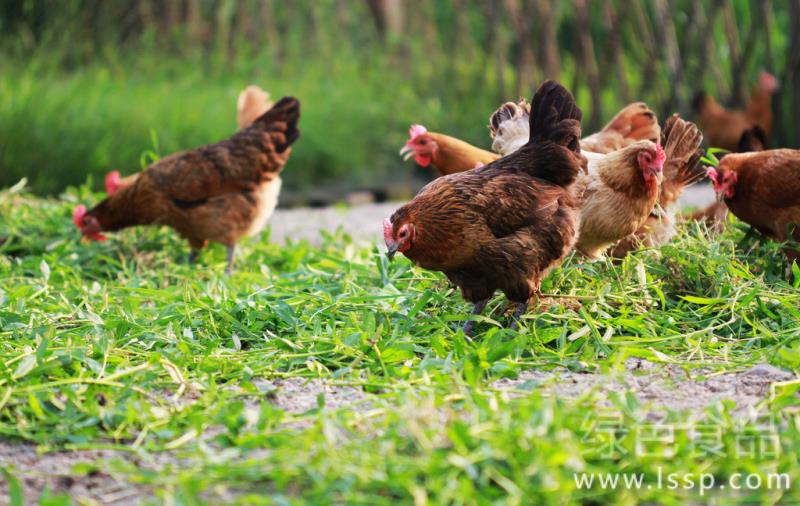
Feeding green fodder to chickens can promote growth and development, but what precautions should be taken?
Green fodder promotes chicken growth and development; precautions for feeding green fodder to chickens
条件筛选