-
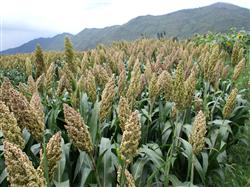
What is the suitable temperature for the growth and development of sorghum?
What kind of temperature is suitable for the growth and development of sorghum? Please provide an introduction. The optimum temperature for sorghum seed germination is 18-35°C. If the temperature is too high, the seedlings will be tall and spindly; if the temperature is too low, in severe cases the seeds will rot, and in mild cases the seedlings will grow slowly. The optimum temperature for seedling growth and development is 20-25°C, and the suitable temperature during jointing and booting is...
-
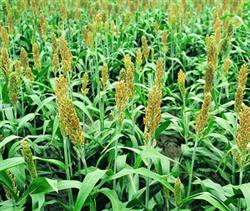
What kind of moisture conditions does sorghum need for its growth and development?
What are the moisture conditions suitable for sorghum growth and development? Here is an introduction. Sowing can be done when the soil moisture content is 15%-20%. The water requirement at the seedling stage accounts for 8%-15% of the total water requirement throughout the entire growth period. The most suitable soil moisture content is 50%-65% of the field maximum water-holding capacity. During the seedling stage, properly controlling soil moisture...
-

What to Do About Poor Development in Loofah? Detailed Solutions
What to Do About Poor Development in Loofah
-

Key Field Management Techniques for Rice During the Jointing and Panicle Development Stage
Field Management Techniques for Rice During the Jointing and Panicle Development Stage
-

Why do chive leaves develop dry tips? Causes and control methods
Causes of dry tips on chive leaves and control methods
-
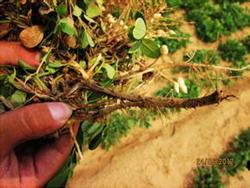
What are the benefits of applying organic fertilizer to peanuts for their growth and development?
What is peanut stem rot? Peanut stem rot is also called peanut stem rot disease or foot rot. Before the seedlings emerge, the affected cotyledons turn dark brown. The pathogen invades the base of the plant stem along the cotyledon stalk, first producing lesions that ooze yellow fluid, which later turn brown. As the lesions develop, they cause the tissue at the stem base to rot. When the lesions expand and encircle the stem base, the aboveground part wilts...
-
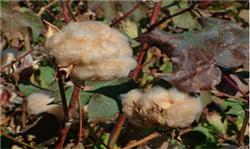
When Is the Best Time to Ripen Late-Developing Cotton
In recent years, we have trial-planted several colored cottons, including light brown, dark brown and green. The results show that to achieve good color effects and high yields, the following five key points must be grasped in cultivation. 1. Early sowing and early transplanting at the right time. According to the growth habits of colored cotton, it should be sown appropriately early; in our area, late March is suitable...
-

Proper drought and disease prevention management during the garlic scape development period
The garlic scape development period is the reproductive growth stage of garlic, mainly including the flower bud differentiation stage and the scape elongation stage. The differentiation of flower buds and bulbils is a critical period in garlic growth and development, and smooth differentiation helps increase yield. The scape elongation stage refers to the period from when the scape begins to elongate until the scape is harvested after the tail-flicking stage, about 30 days. During the garlic scape development period, flower bud differentiation requires temperatures below 10°C; the scape elongation stage requires an optimal temperature of 12°C-18°C. If the temperature is too low, the scape elongates slowly, affecting yield; if the temperature is too high, the scape elongates quickly, the fiber content increases, and quality deteriorates.
-
Rice quality amylose tester successfully developed through the 948 Program
To fundamentally improve the current rice quality, namely the amylose content of rice, in 2001 the Ministry of Agriculture included the "Rice Quality Amylose Tester" project in the "948" Program. Organized and implemented by China Agricultural University, the project aimed to develop, through this research, a high-quality paddy quality testing instrument suitable for all stages and all levels. Under the leadership of project leader Professor Jia Guiru, Director of the Department of Applied Physics at China Agricultural University, the project has now been completed and has achieved remarkable results. It is reported that the rice
-
Detailed Explanation of the Growth, Development and Functions of Rice Roots
After the seeds are pre-germinated, they sprout and grow roots. At first, only one root grows, called the seminal root (primary root), which develops from the radicle of the seed. The fibrous roots that later grow from the root primordia at the stem nodes are called adventitious roots. The coleoptile node and the incomplete leaf node produce about 5 roots, the first, second and third leaf nodes produce about 10 roots each, and the nodes above the fourth leaf position produce about 10 to 20 roots each. This is because the leaves increase in size in sequence from bottom to top, so the nutrients supplied for root growth increase in sequence, and the number of roots produced also increases. The nodes of the aboveground part generally do not produce roots. The nutrients produced by the leaves are
条件筛选