-

What kind of environmental conditions does Codonopsis pilosula cultivation require?
Codonopsis pilosula is also known as three-leaf vegetable, single leaf, and stinking codonopsis. It is a perennial climbing herbaceous plant of the Campanulaceae family. Codonopsis pilosula is a commonly used traditional Chinese medicine, originally from Shangdang, Shanxi; its root resembles ginseng, hence the name codonopsis. The root is used medicinally and has the functions of tonifying qi and nourishing blood, harmonizing the spleen and stomach, promoting fluid production and clearing the lungs. There are many varieties of codonopsis medicinal material, such as Western codonopsis, mainly produced in Gansu, Shanxi, Sichuan and other provinces; Eastern codonopsis, mainly produced in the northeastern provinces; Lu codonopsis, mainly produced in Shanxi, Henan and other provinces. The Tai codonopsis among the Western codonopsis is especially the best in quality. Codonopsis is a deep-rooted plant that prefers a cool and moist climate.
-
Symptom Identification and Control Methods of Root Rot in Codonopsis pilosula
The pathogen is a type of imperfect fungus among the fungi, and it is divided into two types: chronic onset and acute onset. In the chronic type, the disease begins in mid to late May. In the early stage of the disease, dark purple lesions appear on the lower fibrous roots or lateral roots, which then turn black and rot. After the disease spreads to the main root, it gradually rots from bottom to top. The remaining unrotted part is mostly a "half-section ginseng," and the area near the rotted part is dark brown. The stems and leaves above ground gradually turn yellow and eventually die. In the acute type, the disease mostly begins in mid to late June. Once the ginseng root is infected, almost the entire ginseng root becomes diseased at the same time
-
Detailed Explanation of High-Yield Cultivation Techniques for Codonopsis pilosula
The Chinese medicinal herb Codonopsis pilosula (poor man's ginseng) uses its root as medicine, and it grows at forest edges or in thickets. It is distributed in western Sichuan, Gansu, Shanxi, Henan, Inner Mongolia, Hebei, Shaanxi, Northeast China and other places. It is cultivated in most provinces and cities across the country. Its taste is sweet, and its nature is neutral. I. Biological Characteristics: It has strong cold resistance and prefers cool mountainous areas. It can be planted in mountainous areas at an altitude of 800-2000 m. Deep soil layers, good drainage, and sandy loam soil rich in humus are best. Continuous cropping is avoided. II. Propagation Methods: Codonopsis pilosula adopts sexual reproduction, divided into direct sowing and seedling transplanting.
-
Introduction to the Gansu Codonopsis variety 92-02
Gansu Codonopsis 92-02 is a new Codonopsis variety jointly bred by the Dingxi Dryland Agriculture Research and Extension Center of Gansu Province, the Weiyuan County Science and Technology Bureau, and the Agricultural Extension Center and other units, using the mass selection method over many years according to breeding procedures. The variety passed provincial appraisal and acceptance in 2004, with the achievement level reaching domestic advanced standards, and won the second prize of the Dingxi Municipal Science and Technology Progress Award in 2006. Its variety characteristics are as follows: 1. Characteristics and traits. The variety has a full growth period of 540 d, a plant height of about 150 cm, a green main stem, pale yellow
-
Detailed Explanation of Key Techniques for High-Yield Cultivation of Codonopsis pilosula
Codonopsis pilosula (poor man's ginseng) gets its name from its place of origin, "Shangdang Commandery," and is a perennial herbaceous vine of the Campanulaceae family. Its root is used as medicine. It is distributed across various provinces in the Northeast, Northwest and other regions. At present, the largest area under artificial cultivation is Weiyuan County in our province, which enjoys the reputation of "China's Hometown of Codonopsis pilosula." Pharmacological experiments have shown that Codonopsis pilosula has a blood-sugar-raising effect, can increase red blood cells and hemoglobin levels, raise blood concentration and reduce white blood cells, and also has blood-pressure-lowering and coagulation-promoting effects. Its taste is sweet, and its nature is neutral. It has the functions of tonifying qi, enriching blood and promoting fluid production. It is used for spleen deficiency, poor appetite with loose stools, fatigue of the limbs, shortness of breath and
-
Key Technical Points for Harvesting and Processing Codonopsis pilosula
(1) Harvesting: Direct-sown Codonopsis pilosula needs 3 years before it can be harvested, while transplanted seedlings are best harvested in the second year after transplanting. In autumn, after the above-ground stems and leaves turn yellow and wither, choose a sunny day and dig carefully and deeply, turning out the whole root, avoiding cuts and breakage so that the sap does not flow out and form black scars, which would reduce quality. (2) Processing: Wash the harvested Codonopsis pilosula, grade it, and process each grade separately. First spread it on a drying mat in the sun for 2-3 days; when the roots become soft from drying, tie each grade of Codonopsis pilosula into small bundles, hold the root head with one hand, and with the other hand rub downward along the root several times. The next day, sun-dry again, and in the evening gather them into ox-horn bundles, each weighing 1
-
Control Methods and Key Technical Points for Codonopsis Diseases
I. Rust mainly damages the stems and leaves of Codonopsis. Control methods: clean the field, eliminate field weeds and diseased plants. In the early stage of the disease, spray 25% triadimefon wettable powder at 1000-1500 times dilution, or 90% dithianon sodium at 400 times dilution for control. Spray once every 7-10 days, for 2-3 consecutive sprays. II. Root rot mainly damages the roots of Codonopsis. Control methods: from July to August, apply additional phosphorus and potassium fertilizer. Before transplanting Codonopsis, soak the roots in 50% thiophanate-methyl wettable powder at 1000 times dilution for 5 minutes. When the disease occurs
-
Codonopsis (dangshen)
Codonopsis pilosula, Campanulaceae. Morphological characteristics: a herbaceous twining vine with white milky sap. The root is carrot-shaped and cylindrical, about 30 cm long, often branching in the middle. The stem is about 1.5 cm long, much branched, hairless; leaves alternate; leaf blades ovate or narrowly ovate, 1.2-6.5 cm long, 0.6-5 cm wide, margins wavy and bluntly toothed, both surfaces with dense or sparse short appressed hairs; petioles 0.6-2.5 cm long, often sparsely covered with spreading short hairs. Flowers 1-3 borne
-

How to grow Panicled Codonopsis (Codonopsis convolvulacea)? Master these key growing techniques
Growing techniques for Panicled Codonopsis
-
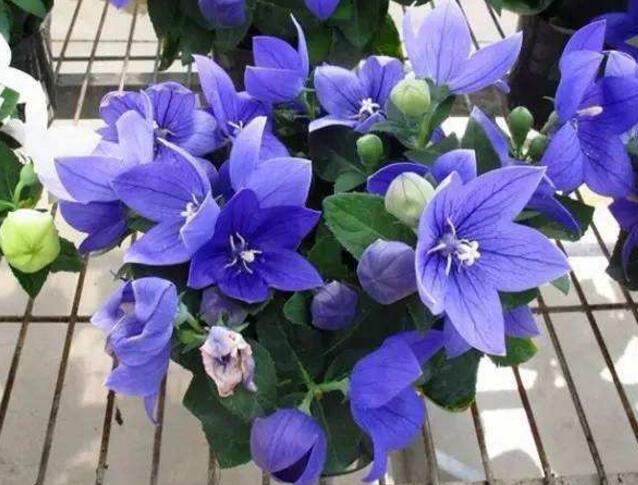
How to grow potted balloon flowers (Platycodon grandiflorus)? They need plenty of light; master the growing methods and precautions
The balloon flower is a flowering plant grown all over the world, with high ornamental value, and keeping one at home for decoration is a very good choice. How do you grow potted balloon flowers, and what are the growing methods and precautions? Let's take a look below
条件筛选