-

Causes and Solutions for Split Leaves in the Middle of Phalaenopsis Orchid Leaves
With its elegant flower posture, the Phalaenopsis orchid has become the "white moonlight" in the hearts of countless flower lovers. Besides its intoxicating flower shape, it has diverse varieties and very rich colors, and in recent years it has also become one of the must-have flowers for the Lunar New Year. However, after buying this aristocrat among flowers and bringing it home, it is not as easy to grow as imagined, and it often suffers from split leaves.
-

Distribution, growing environment characteristics and flowering period of fireweed
Today we introduce a plant whose name sounds poetic: its leaves are as slender as willow leaves, and its flowers are as elegant as orchids when they open. It is called "fireweed" (Chamaenerion angustifolium). Fireweed has a very special ability: it can grow rapidly on land after a fire, and before long it is covered with bright flowers, which is why it is also called "fire grass."
-

How Cold-Tolerant Is Lewisia? Detailed Guide to Growing Methods and Precautions
Today I'm going to tell you about a super beautiful little flower - Lewisia! It counts as a quite popular flower material in the gardening circle, because whether used in combination as a main flower or an accompanying flower, it suits the theme very well. At the same time, the flower language of Lewisia is very good, representing the arrival of good luck and happiness! Lewisia is native to the West Coast of the United States and is a Lewisia
-

What to Do When the Roots of a Phalaenopsis Orchid Are Eaten by Insects? Here's the Correct Way to Handle It
When the roots of a Phalaenopsis orchid are attacked by pests, it seriously affects its growth and health. Below is a detailed guide to handling borer-damaged Phalaenopsis roots, to help growers deal with this problem effectively. First, when the Phalaenopsis shows abnormal growth, such as yellowing leaves, wilting or slow growth, you should suspect its root system
-

Do Phalaenopsis orchids need a temperature difference for care, and what nighttime temperature is suitable?
With their gorgeous blooms, Phalaenopsis orchids have become the dream flower in the hearts of many flower lovers. Especially in the quiet late night, their leaves even sway gently, as if whispering to one another. This mysterious phenomenon makes one wonder: why are Phalaenopsis orchids so fond of temperatures around 15°C? Many flower lovers
-

Why do Phalaenopsis orchids always get root rot, and is it good to spray water on the plant?
Why are Phalaenopsis orchids so sought after by flower lovers? First, their blooming period is extremely long; a single flower can stay open for several months, making them a true "lazy person's blessing"! Second, of course, is their stunning appearance; placed in any corner of the home, they instantly elevate the style. However, after buying a Phalaenopsis, keeping it alive and thriving is not an easy task,
-
How to fertilize Phalaenopsis orchids? A detailed guide to fertilizing timing and methods at each stage
When a Phalaenopsis orchid blooms, it looks just like a butterfly about to take flight, beautiful and ethereal. But if you want it to stay beautiful, you need to fertilize it properly at different stages. Here is what you need to know. When you first grow Phalaenopsis seedlings, their roots and leaves are still very tender, so at this stage you should give them a nitrogen-based fertilizer.
-
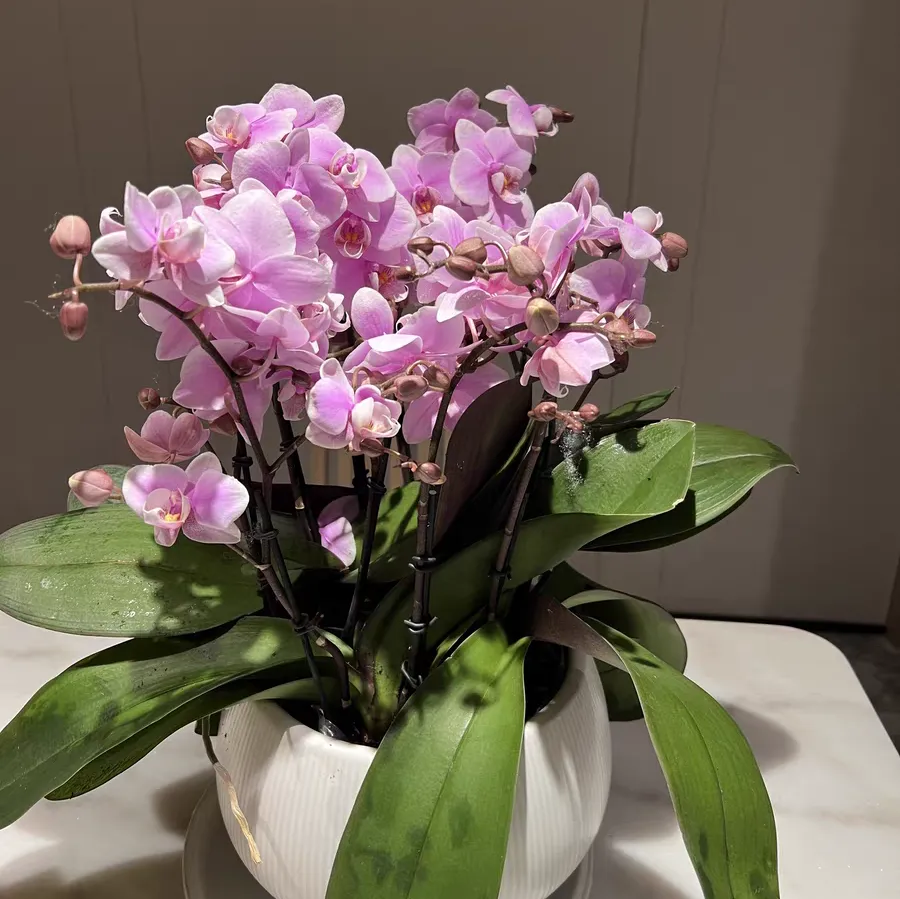
How to Care for and Water Phalaenopsis Just Purchased?
You've just brought home a beautiful Phalaenopsis orchid. Are you both excited and a little at a loss? Don't worry. Follow these methods, and you can ensure
-

Do Phalaenopsis orchids have seeds? What do they look like and how do you plant them so they germinate?
In the world of flowers ablaze with color, the Phalaenopsis is undoubtedly one of the most irresistible flowers. In recent years, with advances in propagation technology, the varieties of Phalaenopsis have increased day by day, and according to incomplete statistics, the varieties can reach over a hundred. Many flower lovers are fond of Phalaenopsis and usually go out of their way to look up the key points of care. And today, little
-

The Benefits and Value of Monochoria korsakowii, plus How to Grow It and What to Watch Out For
Today we are going to introduce a very special aquatic plant called Monochoria korsakowii, also known as the blue bird flower. Its blooming period is concentrated in summer, and when that time comes it produces deep blue flowers in the water, a sight that is especially intoxicating. In addition, it can itself be eaten as a wild vegetable, and in the traditional Chinese medicine text Compendium of Materia Medica it is recorded as having clear
条件筛选