-

Can African violets tolerate strong direct sunlight?
The native environment of the African violet is beneath large trees on high mountains, where the climate is stable and shady, and sunlight only reaches the leaves after being filtered through the foliage. Therefore, when growing African violets, you must take their own characteristics into account and must not treat them like ordinary flowering plants. Most flowering plants need more than 4 hours of direct sunlight each day in order to bloom. But the African violet is a rare exception: if you place it in a window with direct sunlight, the result is either yellowed, withered leaves or a blooming season with no flowers. Because the Af
-
Characteristics and Types of African Violets Explained
African violets prefer a warm, humid, well-ventilated, semi-shaded environment; they dislike high temperatures and fear strong light. The suitable growing temperature is 18-24°C; in winter the temperature must not drop below 10°C, and in summer it must not exceed 30°C, with relative humidity of 40%-79%. The plant is short and forms a rosette shape; the leaves are thick and fleshy like velvet; the flowering period is long, and the flower color is mainly blue-purple, which is how the common name "violet" came about. They are easy to propagate and are a popular indoor potted ornamental plant worldwide. Through hybridization, their horticultural varieties have continued to increase, now numbering more than 2,000
-
African Violet Home Cultivation Methods and Care Tips
Stop fertilizing during both the low temperatures of winter and the high temperatures of summer. When watering and fertilizing, take care to avoid splashing water or fertilizer on the leaf surface, and do not frequently spray water on the leaves, because when water droplets remain among the leaf hairs for a long time, the leaves will develop unsightly yellow spots or even rot. However, to increase air humidity, you can spray water around the plant; if the air circulates well and evaporation is fast, you may also spray a small amount of water on the leaf surface, and the water sprayed should be close to room temperature, not too cold.
-
How to grow and care for the African violet, a famous indoor flowering plant
The African violet (Saintpaulia) is a small, elegant plant with thick, velvety leaves, rich flower colors, and graceful flower shapes. It blooms continuously through all four seasons and is easy to manage, making it an important indoor ornamental plant. The African violet originates from the understory rocky areas of montane rainforest regions at 1,000 to 2,000 m in tropical Africa. The local environment is shady and humid, rich in humus, and spring-like all year round. The plant fears both cold and heat; the suitable temperature is 18-24°C, below 16°C growth is slow, the leaves harden and droop, and it is prone to mold diseases; below 10°C it is susceptible to cold damage, with the leaf margins and young leaves scorched, and
-
-
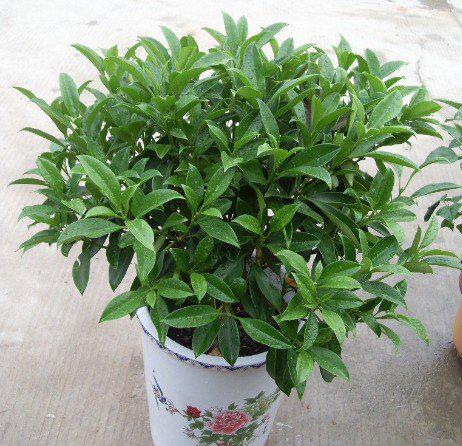
What causes yellowing leaves on the African jasmine?
African jasmine readily adapts to unfamiliar environments and can be grown in courtyards and on balconies. Its branches are the color of jade, its leaves are glossy and shining, and its flowers are slightly fragrant with an elegant shape, each with five petals, arranged in umbels clustered at the tips of the flowering branches. Its flowering period is very long, blooming in both winter and summer, with the most splendid blooms in spring and summer.
-
-
-
-

Banning kitchen waste feeding of pigs: kitchen waste may become a transmission route for African swine fever virus
If the African swine fever virus enters China, then kitchen waste is also a very risky transmission route. Let's take a look below. If the African swine fever virus enters China, kitchen waste is absolutely a high-risk route, but at present, after taking stock, the Council of Agriculture has
条件筛选