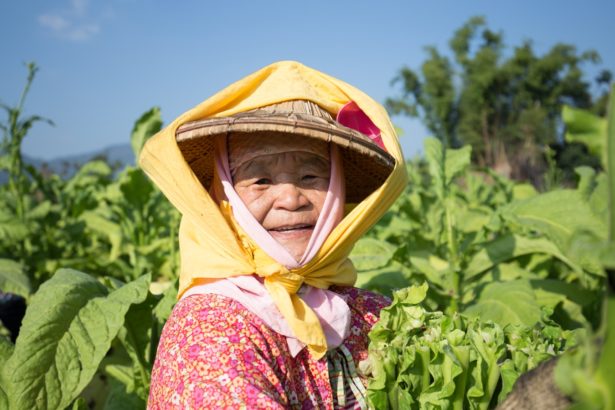
The production areas of Job's tears are distributed across Guizhou, Yunnan, Fujian and Southeast Asia, among other places.
Job's tears, also known as coix seed or adlay millet, is the seed kernel of the grass family plant Coix lacryma-jobi. It can be cooked into congee or soup, and it is also a common food-and-medicine ingredient. It prefers a warm, humid climate and grows best in places with abundant rainfall and a long frost-free period, so its production areas show a clear regional pattern.
Within China, the main Job's tears production areas are concentrated in the southwest and southeast. Guizhou is an important coix seed production area, and places such as Xingren have a long history of cultivation and have formed an industrial setup integrating planting, processing and trading; mountainous areas in provinces and regions such as Yunnan and Guangxi also have fairly large cultivation areas. Job's tears produced in Pucheng, Fujian, is likewise long famous and has always been regarded as one of the representatives of outstanding quality.
In addition to domestic production areas, a considerable share of the Job's tears on the market comes from Southeast Asia. Vietnam, Laos, Thailand, Myanmar and other places have hot, humid climates that suit Job's tears well, making them the main sources of imported Job's tears; although there is scattered cultivation in the Taiwan region of China, local output is limited, and consumption mostly relies on imports to make up the difference.
Depending on the production area, Job's tears can differ somewhat in grain size, taste and stickiness. When buying, you can pay attention to the origin information on the packaging and choose products with plump grains, natural color, and a dry texture with no off-odor. No matter where it comes from, Job's tears is suitable for congee, soup, or grinding into flour for making snacks, and it is a common coarse grain on family tables.
Related Reading