Common Types of Phosphate Fertilizers and Key Application Points
Phosphate fertilizer refers to fertilizer based mainly on phosphorus nutrients. It can promote crop root development and plump seeds and grains, and is especially important for flowering and fruiting crops. For example, adding phosphate fertilizer to watermelons, fruit trees and the like often helps flowering and fruit setting. According to the solubility characteristics of phosphorus, common phosphate fertilizers are broadly divided into three major categories: water-soluble phosphate fertilizers, citrate-soluble phosphate fertilizers, and sparingly soluble phosphate fertilizers.
Water-soluble phosphate fertilizers are represented by superphosphate and triple superphosphate. Their nutrients can dissolve directly in water, their fertilizer effect is quick, and they are suitable for most soils and for use during the seedling stage of crops; they can also be used for foliar spraying. Citrate-soluble phosphate fertilizers are most commonly represented by calcium magnesium phosphate. They do not dissolve in water but can be dissolved by weak acids, their fertilizer effect is steady and long-lasting, and they perform relatively well on acidic soils. Sparingly soluble phosphate fertilizers include phosphate rock powder, bone meal and others. They are slow-release fertilizers, with nutrients released slowly, and are mostly used as a base fertilizer in combination with organic fertilizer.
Methods must be paid attention to when applying phosphate fertilizer. Phosphorus has poor mobility in soil and is easily fixed by elements such as calcium, iron and aluminum in the soil, which reduces fertilizer efficiency. Therefore, it is best to apply it in a concentrated and deep placement near the roots, as a base fertilizer whenever possible; mixing it with organic fertilizer can also reduce fixation and improve utilization efficiency.
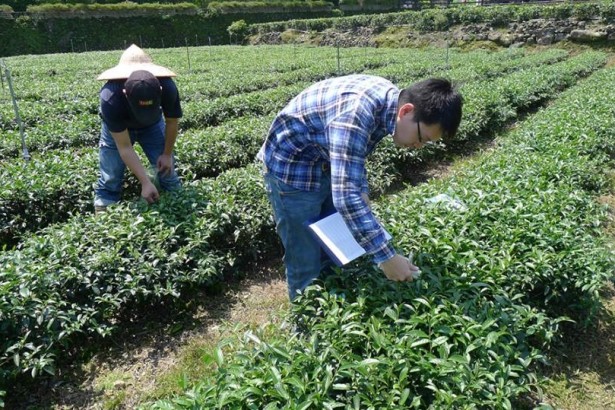
The amount of phosphate fertilizer applied should also be moderate. Long-term excessive application not only wastes nutrients, but may also be lost with rainwater and irrigation water into rivers and reservoirs, worsening water pollution. At present, tea gardens around some water source areas have already implemented low-phosphorus fertilization, reducing pressure on the water environment while ensuring normal crop growth.