Characteristics and Care Methods of Cymbidium bicolor: An Introduction
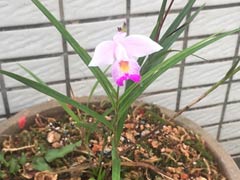
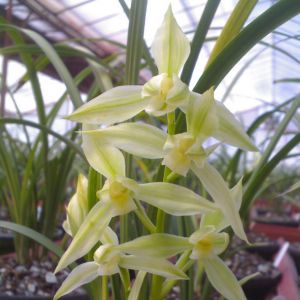
Cymbidium bicolor is a perennial evergreen epiphytic herb in the orchid family (Orchidaceae), genus Cymbidium, named for its thick, hard, leathery, upright leaves. It has fairly prominent pseudobulbs, strap-shaped leaves whose bases clasp one another, and deep green, glossy foliage, giving the whole plant a compact, upright form. It usually blooms in winter and spring, with the flower scape emerging from the leaf cluster and bearing several flowers; the flowers are mostly yellow-green in the background with purplish-brown veins or spots, the lip bears dark patches, and some plants have a delicate fragrance.
In China, Cymbidium bicolor is mainly distributed in the mountain forest areas of the southwest, while abroad it is found in some mountainous areas of South Asia and Southeast Asia. It often grows attached to tree trunks or rocks in forests, preferring well-ventilated, humid environments. Among Chinese cymbidium enthusiasts, it is often confused with closely related species such as Songchun and Cymbidium faberi var. szechuanicum; when identifying it, focus on the thickness and hardness of the leaves, how upright the leaf posture is, and the markings on the tepals and the features of the lip, and it is generally not difficult to tell apart.
For home cultivation of Cymbidium bicolor, you can mimic its epiphytic habits by using loose, breathable potting media such as bark chunks, volcanic rock, and tree-fern fibers, with the bottom of the pot raised to aid drainage. Water in daily care should follow the "dry-wet cycle" principle, avoiding water accumulation in the pot that causes root rot; in summer, provide shade and strengthen ventilation, and in winter move it indoors or take insulation measures to prevent frost. During the growing season, apply light fertilizer frequently; propagation is mainly by division after flowering or in spring when repotting, taking care to minimize damage to the roots and pseudobulbs.
Cymbidium bicolor keeps its leaves green year-round and looks elegant and appealing when in bloom, offering both foliage and flower value, and is suitable for placement on balconies, in courtyards, or in living rooms with ample scattered light. It should be noted that wild orchid resources are generally protected, so when buying, choose artificially propagated seedlings and purchase from legitimate channels; never dig up wild plants.