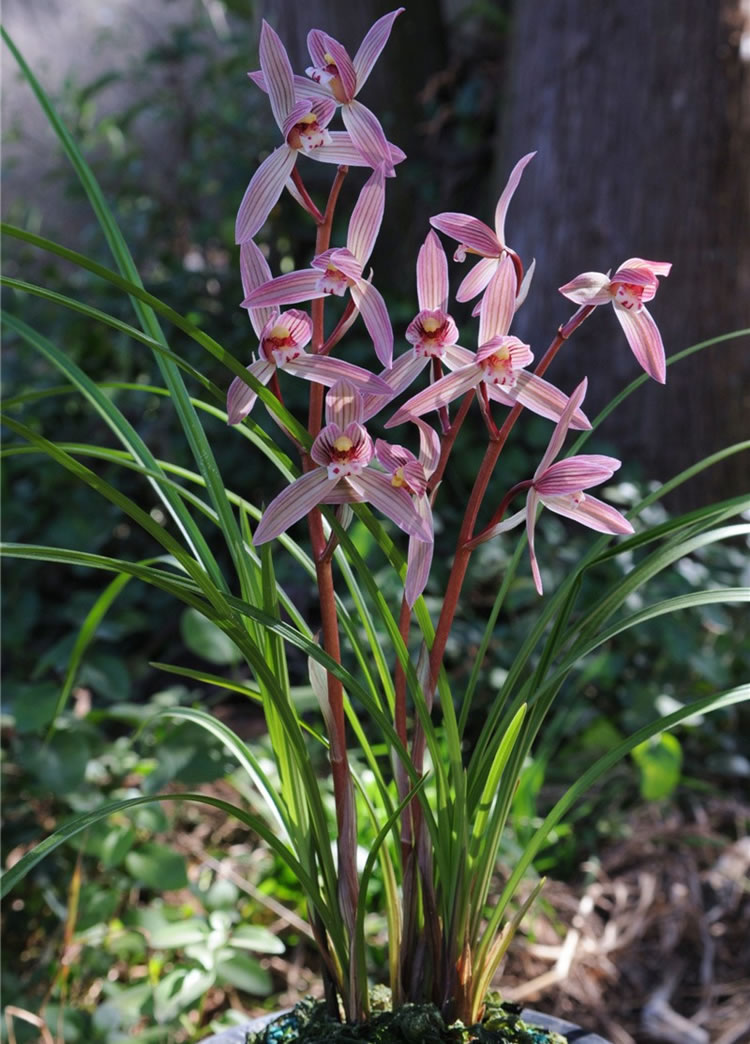
Rhododendron simsii seedlings prefer acidic soil and have high ornamental value
Rhododendron simsii seedlings are the young plants of Rhododendron simsii, a plant in the genus Rhododendron of the family Ericaceae, and are mostly deciduous or semi-evergreen shrubs. Their plant form is compact, with fine, dense branches and leaves. When they bloom in spring, the whole tree is covered with red flowers, and they are often used for courtyard accents, potted display, or slope greening. Besides the common types, horticulture has also bred lotus-petal-type cultivars with layered petals resembling a lotus, which have even higher ornamental value.
Rhododendron simsii seedlings prefer a warm, humid, semi-shaded environment, and are suitable for growing in loose, fertile, well-drained acidic soil; they are averse to alkaline soil and prolonged waterlogging. Their root system is fine and rather shallow, and they fear both drought and waterlogging, so daily management needs to keep the soil moist but not waterlogged.
Planting Rhododendron simsii seedlings is mostly done in spring or autumn. Before planting, damaged roots can be pruned appropriately; after planting, water thoroughly to settle the roots and provide appropriate shade to help the plants recover. During the growing season, apply light fertilizer frequently, preferably well-rotted acidic fertilizer, and avoid strong fertilizer that burns the roots. After flowering, promptly remove spent flowers and overly dense branches, which helps the plant form a full shape and bloom the following year.
A common problem in care is yellowing leaves, mostly caused by soil that is too alkaline or improper watering, and it can be improved by applying ferrous sulfate solution or switching to acidic potting soil. Pay attention to shading and cooling during high temperatures and strong light in summer, and provide appropriate cold protection in cold regions in winter; the plants can generally overwinter safely.
Related Reading