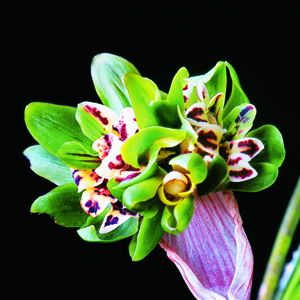
The Orchid Cultivation Bible: A Detailed Guide to Orchid Growing and Daily Care Techniques
The Orchid Cultivation Bible is a vivid way gardening enthusiasts describe their experience growing orchids, and generally refers to a collection of materials that systematically introduce orchid care knowledge. It usually covers variety identification, environmental control, water and fertilizer management, pest and disease control, and more. It can help beginners avoid unnecessary detours and also makes it easy for experienced orchid growers to fill in gaps.
Most orchids prefer a warm, humid, well-ventilated, semi-shaded environment. When planting, the growing medium should be loose and breathable, commonly made from a mix of bark, sphagnum moss, leaf mold, and similar materials. It is not advisable to use heavy, compacted garden soil directly, otherwise the roots can easily suffocate and rot.
Watering should follow the principle of watering when dry and letting it dry between waterings. Wait until the surface of the potting medium is dry, then water thoroughly in one go, avoiding long-term waterlogging that causes root rot. During the growing season, a diluted liquid fertilizer can be applied; it is better to keep the concentration too weak than too strong, and fertilization should be reduced or stopped in hot weather or when the plant is dormant.
In daily care, yellowing leaves are often related to excessive light or water accumulating in the pot, while failure to bloom is often caused by insufficient light or an inadequate day-night temperature difference. When leaf spots or pests are found, diseased leaves should be cut off promptly, ventilation should be improved, and targeted treatment should be used when necessary.
The value of a practical orchid cultivation bible lies in turning scattered experience into actionable steps. Different orchid species such as Cymbidium goeringii (Spring Orchid), Cymbidium ensifolium (Fragrant Orchid), and Cymbidium sinense (Chinese Cymbidium) differ considerably in their habits. Before starting, first understand the native environment of the variety being grown, then adjust flexibly based on experience, so the orchids can be grown better and better.
Related Reading