An Introduction to the Characteristics and Everyday Care of the Wuling Mountain Treasure Cymbidium goeringii
Wuling Mountain Treasure is a cultivar of Cymbidium goeringii (the spring orchid), and its name comes from its place of origin, the Wuling Mountain area. The Wuling Mountains stretch across Hunan, Hubei, Guizhou, Chongqing and other places. The climate in the mountains is mild and humid and the forests are dense, and the area has long been an important growing region for wild spring orchids. Orchids collected from this area are often regarded by orchid enthusiasts as fine specimens, and Wuling Mountain Treasure belongs to this category.
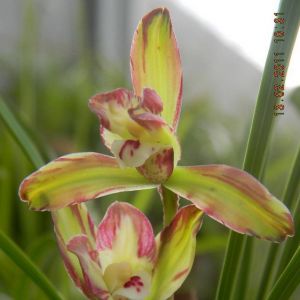
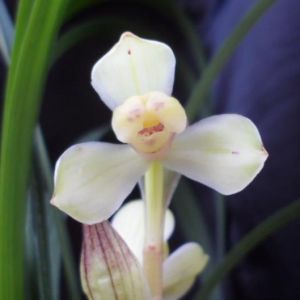
As a spring orchid, Wuling Mountain Treasure retains the typical characteristics of this species: the leaves are slender and strap-shaped, with fine teeth along the edges, the plant is not large, and the leaf posture is graceful and flowing. The flowering period is mostly in early spring, usually with one flower per scape and occasionally two, and the flowers are delicate and elegant with a faint, far-reaching fragrance. The specific floral performance often varies slightly with the individual plant and the growing conditions. When selecting one, those with spreading leaf posture, well-formed flowers and pure fragrance are preferred.
Caring for Wuling Mountain Treasure is similar to caring for ordinary spring orchids. The growing medium should be loose, breathable and well-draining, commonly mixed from bark, Kanuma soil, leaf mold and similar materials; the placement should be in bright, indirect light, avoiding direct scorching sun. Watering should follow a wet-dry cycle, and water must never accumulate in the pot, while the surrounding environment should be kept ventilated. In winter, exposure to appropriate low temperatures helps complete vernalization and promotes flowering the following year, a point that especially needs attention when growing the plant in a heated room.
The ornamental value of this type of cultivar is mainly reflected in the combined performance of leaves, flowers and fragrance. It is suitable for a refined display on a desk, and is also commonly seen at orchid exchange events. Beginners easily run into problems with root rot and failure to bloom; the former is mostly caused by overly frequent watering or compacted medium, while the latter is often related to insufficient temperature difference and inadequate light. Once the cause is identified and adjustments are made in time, the plant can generally recover its condition gradually.