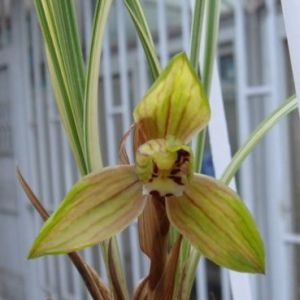
Disporum is a shade-tolerant perennial herb with both ornamental and medicinal value
Disporum is a perennial herb of the genus Disporum, named for its leaves, which resemble bamboo leaves. Its underground rhizome creeps horizontally, its stems are upright, and its plant form is delicate and elegant. It is fairly common in shady, damp places such as under forest canopy, in thickets, or beside streams in the mountainous areas of southern China, and it is a plant with a strong wild, woodland character.
In appearance, the leaves of Disporum are alternate, mostly ovate or elliptic, with distinctly curved veins on the surface, giving it an overall graceful look. In late spring and early summer it produces small bell-shaped flowers that hang downward, usually yellow-green or tinged with a hint of purple, after which it forms spherical berries that turn a darker color when ripe, hanging on the branches with a rather wild charm.
For care, Disporum prefers a warm, humid, semi-shaded environment and is most afraid of scorching sun, so in a courtyard it is best planted under tree shade or in a shaded spot by a wall corner. A loose, fertile, well-drained sandy loam soil is ideal; during the growing season it is enough to keep the soil slightly moist, and care should be taken to avoid waterlogging. Propagation is commonly done by division: in spring and autumn, cut the rhizome apart and plant the sections separately. They root relatively easily, and management is fairly low-maintenance.
Its uses are mainly twofold: first, ornamental, as it is very shade-tolerant and elegant in form, and can serve both as a ground cover under trees and as a potted accent; second, in some regions its rhizome is used in folk tradition as a medicinal material, and anyone who needs it should consult a professional first. It should also be noted that in flower markets some people also call lucky bamboo "wanshouzhu," but that is a plant of the genus Dracaena and is not the same species as the Disporum discussed in this article, so when buying it is best to look at the actual plant before deciding.
Related Reading