Characteristics and Care Methods of Cymbidium cyperifolium, an Orchid with Leaves Like Cyperus
Cymbidium cyperifolium is a terrestrial orchid in the genus Cymbidium of the family Orchidaceae, named for its slender leaves that resemble those of Cyperus. It is mainly distributed in the warm, humid mountain forest regions of southwestern and southern China, and mostly grows under the forest, at forest edges, or beside stream valleys in well-drained spots, belonging to the same large family as common Chinese orchids such as Cymbidium goeringii and Cymbidium faberi.
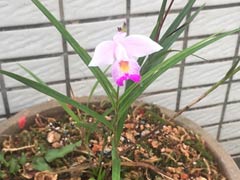
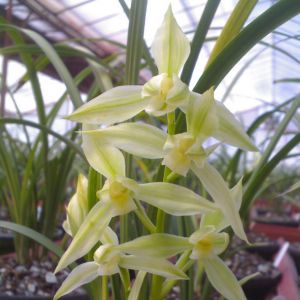
Its pseudobulbs are relatively small and are often wrapped by the leaf bases; the leaves are strap-shaped, folded at the base and overlapping left and right, looking quite similar to the leaves of Cyperus, which is also an important feature for identifying it. The flower scapes mostly emerge from the sides of the pseudobulbs, often shorter than the leaves or nearly equal in length to them, and bear several flowers; the flower color is mostly yellow-green with purplish-brown vein markings, the lip has spots, and it often carries a delicate fragrance, with the flowering period mostly concentrated in autumn and winter, varying slightly among different producing areas.
As for care, Cymbidium cyperifolium prefers a warm, humid, well-ventilated semi-shaded environment, and dislikes scorching sun exposure and water accumulation in the pot. The growing medium should be loose, breathable, and rich in humus, such as leaf mold combined with bark, coconut husk, and the like; during the growing season, keep the potting soil slightly moist and apply light fertilizer frequently, take care to shade and cool down in summer, and appropriately control water and protect against cold in winter.
Because the leaf shape is similar, Cymbidium cyperifolium is often mistaken for species such as Songchun, Cymbidium Faberi Rolfe, and Qiuzhi; when distinguishing them, one can make a comprehensive judgment based on the degree of leaf-base overlap, leaf width, flower color, and flowering period. At present, its wild resources in some producing areas have declined due to digging, and attention should be paid to protection; for orchid enthusiasts, its flowers are elegant in color and delicately fragrant, making it a rather distinctive ornamental orchid.