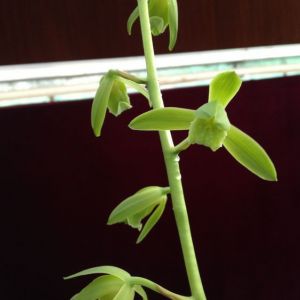
Konggu Zuyin: A Famous Cymbidium faberi Variety, with Detailed Features and Care Methods
Konggu Zuyin is a famous variety among Chinese orchids of the Cymbidium faberi species, and a variety name quite familiar to orchid enthusiasts. It inherits the typical characteristics of Cymbidium faberi: the leaves are slender and tough with fine serrations along the edges, the flower scape stands upright and rises above the foliage, a single scape can bear multiple flowers, and the flowering period is mostly in late spring. The blooms are well formed and elegantly colored, complemented by a delicate, lasting fragrance, giving it high ornamental value.
The name comes from the idiom "konggu zuyin", which originates from Zhuangzi; its original meaning is the sound of human footsteps coming from an empty valley, a metaphor for something very rare. Using it to name an orchid not only highlights the rarity of the variety but also carries a touch of scholarly elegance, which is a common approach in traditional orchid naming.
In terms of care, Konggu Zuyin is much the same as other Cymbidium faberi orchids. The growing medium should be loose, breathable and well drained, commonly mixed from bark, granular stone materials and the like; normally place it in a ventilated spot with scattered light, provide appropriate shading in summer, and in winter allow the plant to go through a period of low-temperature vernalization, which favors flowering the following year. Water by the principle of letting the medium dry before watering again, and never allow water to accumulate in the pot; during the growing season, apply light fertilizer frequently.
It should be noted that in the famous-variety orchid market there are many plants sold under the same name or as similar seedlings, so when buying you should confirm the bloom characteristics and choose a reputable seller to avoid getting plants that do not match what was advertised. In routine management, focus on preventing stem rot, anthracnose and the like, keep the environment ventilated, and avoid high temperature and high humidity; after flowering, promptly cut off the spent flowers so the plant can store nutrients and bloom better the following year.
Related Reading