Characteristics of Palm Family Plants and Introduction to Common Species
The palm family (Arecaceae) is a large family within the monocotyledons, mainly distributed in tropical and subtropical regions. The entire family contains more than two hundred genera and thousands of species. Familiar plants such as the coconut, Chinese fan palm, areca palm, areca palm (Dypsis lutescens), and bamboo palm all belong to this family. What people commonly call palm trees is usually just a general term for this group of plants.
Plants in the palm family are mostly evergreen trees or shrubs, with upright stems that generally do not branch, and large leaves clustered at the top of the stem, divided into feather-like (pinnate) or fan-like (palmate) forms. Some species have tall, straight trunks, while others grow in low, clustered clumps, making them highly recognizable in form. It is precisely because of this distinctive appearance that they are often used to create tropical-style garden landscapes.
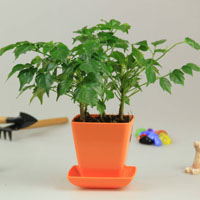
In terms of practical value, this family produces quite a few important economic crops. The fruit and sap of the coconut can be eaten, the oil palm is an important source of oil, the leaves of the Chinese fan palm can be used to make fans, and the fibers of some palm plants can also be woven into ropes. In gardens and home environments, the areca palm (Dypsis lutescens), the pygmy date palm, and others are also popular foliage plants.
As for care, most palm family plants prefer warmth, humidity, and ample light; they are rather poor at tolerating cold and are also afraid of long-term waterlogging. When caring for them at home, keep them warm in winter, and in dry seasons you can spray water appropriately to increase humidity. If the leaf tips become scorched and withered, it is mostly related to dry air or low temperatures, while a wilting plant requires checking whether it has been overwatered.
Related Reading