The effects of Anemarrhena asphodeloides (Zhimu) mainly involve two aspects: clearing heat and purging fire, and nourishing yin and moistening dryness.
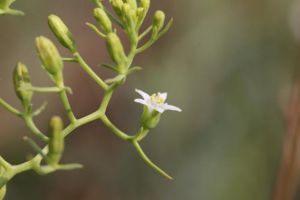
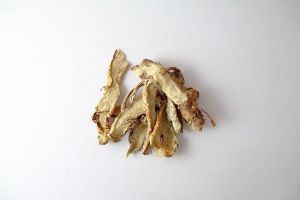
Anemarrhena asphodeloides (Zhimu) is a traditional commonly used Chinese medicinal herb, derived from the dried rhizome of the perennial herbaceous plant Anemarrhena asphodeloides, and it is distributed and cultivated in North China, Northwest China and other regions of China. Its rhizome is in the shape of a flat round strip, and the surface often bears yellow-brown residual fibrous bases, so the medicinal material is also known as hairy Zhimu. Zhimu is bitter and sweet in taste and cold in nature, and has long been valued for clearing and resolving heat pathogens.
The core effects of Zhimu can be summarized as two aspects: clearing heat and purging fire, and nourishing yin and moistening dryness. It is often used for externally contracted fever, high fever with restlessness and thirst, and other such conditions, and is good at clearing and draining the fire of the lung and stomach. At the same time, it can nourish the yin of the lung and kidney, and also has regulating significance for lung heat with dry cough, yin deficiency fever, internal heat with wasting thirst, and dry intestine with constipation, among other patterns.
In terms of combined application, Zhimu is often used together with gypsum to clear and resolve excess heat at the qi level, which is a very classic combination in traditional Chinese medicine. When treating yin deficiency with dry cough, it is also often used in mutual reinforcement with medicinal materials such as Fritillaria. In addition to its medicinal value, Zhimu is also a common medicinal crop, tolerant of drought and cold with strong adaptability, suitable for planting in sunny, dry plots with good drainage, with relatively extensive cultivation management and certain planting benefits.
It should be noted that Zhimu is cold and cool in nature, so those with spleen-stomach deficiency cold or loose stools should not use much of it, and those with weak constitution or belonging to special populations should be even more cautious. If a formula containing Zhimu needs to be taken, it is recommended to first undergo syndrome differentiation by a Chinese medicine practitioner, and determine the dosage and course of treatment on the basis of clear indications, so as to avoid long-term use damaging the yang qi of the spleen and stomach.
Related Reading