What Flower Is Amaranthus tricolor? An Introduction to Its Characteristics and Care Methods
Amaranthus tricolor is an annual herbaceous foliage plant belonging to the genus Amaranthus in the family Amaranthaceae, also known as three-colored amaranth, laolaiShao, and laoshaonian. It has a long history of cultivation in China, where it was initially grown mainly as a vegetable and later gradually developed into an ornamental plant because of its brilliant leaf color. After autumn arrives, the leaves at the top of the plant turn from green to red, just as wild geese fly south, which is how Amaranthus tricolor got its name.
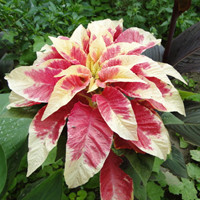
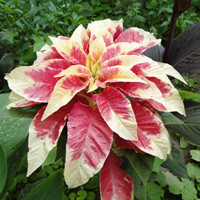
The most striking characteristic of Amaranthus tricolor is that its leaf color changes with the seasons. During spring and summer, the leaves are mainly green; after entering autumn, the young leaves at the top successively turn bright red, orange-yellow, and other colors, and the foliage display can even surpass that of many flowering plants. Because the ornamental focus is on the leaves rather than the flowers, it is often used as an important colorful foliage material in autumn flowerbeds.
In terms of care, Amaranthus tricolor prefers warmth and ample sunlight, is relatively drought-tolerant, and fears waterlogging and damp, shady environments. It is generally propagated mainly by sowing in spring; after seedlings emerge, they should be properly thinned and transplanted, and summer is the peak growing season. The soil should be loose, fertile, well-drained sandy loam; watering should not be too frequent, and excessive fertilizer can instead easily cause leggy growth and paler leaf color.
In application, Amaranthus tricolor is often arranged in flowerbeds and flower borders, or planted in masses to create a landscape effect like autumn-colored ribbons, and it can also be potted to accent balconies and courtyards. Its tender leaves can also be eaten as a vegetable, with a taste similar to amaranth, giving it both ornamental and practical value. During cultivation, if it encounters insufficient light or too much nitrogen fertilizer, the leaf color is often not vivid enough, and management methods need to be adjusted promptly.