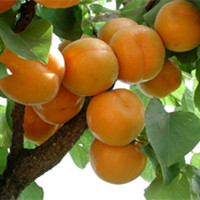
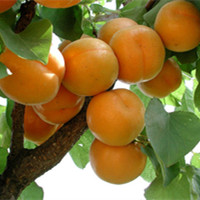
Apricot trees are commonly grafted using two methods: whip-and-tongue grafting and bud grafting.
Grafting apricot trees is a commonly used asexual propagation technique in apricot propagation and variety improvement. The method involves grafting the branches or buds of a superior variety onto a rootstock so that the two heal and grow into a new plant. Grafting can better preserve the excellent characteristics of the mother variety, allow apricot trees to bear fruit earlier, and also use the strong adaptability of the rootstock to improve the plant's stress resistance.
For grafting apricot trees, seedlings of wild apricot or common apricot are mostly used as rootstocks, and the rootstock is required to grow robustly and be free of pests and diseases. Scions should be cut from adult mother trees with pure variety and vigorous growth, generally selecting well-developed one-year-old branches. After cutting, attention should be paid to keeping them moist; grafting immediately after collection gives a higher survival rate.
The commonly used grafting methods fall into two major categories: branch grafting and bud grafting. Branch grafting includes cleft grafting, cut grafting, and bark grafting, and is mostly carried out in spring when the sap begins to flow; bud grafting commonly uses T-shaped budding or budding with a piece of wood, and is mostly done in summer and autumn when the bark of the rootstock and scion separates easily. During grafting, the cut surfaces should be smooth, the cambium layers of the rootstock and scion should be aligned, and the binding should be tight. These are all key to improving the survival rate.
After grafting, management should be strengthened, attention should be paid to moisture retention, and suckers sprouting from the rootstock should be removed in time to prevent nutrient consumption. After the scion survives and sprouts, the binding material should be removed only after the new shoots have grown to a certain length, so as to avoid constricting the branches, while also providing wind protection support and pest and disease control. If the scion does not sprout for a long time or has already dried up, it can be regrafted in a suitable season.