Apricot trees love sunlight and tolerate drought, making them suitable for planting in well-drained soil.
The apricot tree is a deciduous tree of the Rosaceae family, native to China, with a long history of cultivation. It is both a common fruit tree and can serve as an ornamental garden tree. Its canopy is broad and open, with leaves that are ovate to nearly round. In early spring it blooms before leafing out, with white or slightly pink flowers; at peak bloom the whole tree is covered in blossoms, creating a fine ornamental effect.
The apricot tree is highly adaptable and prefers a climate with ample sunlight, dry and cool conditions. Its cold tolerance and drought tolerance are both quite outstanding, and it is not demanding about soil, though it grows best in deep, well-drained sandy loam. It dislikes waterlogging; if the roots are waterlogged for a long time, the tree's vigor tends to decline, so drainage should be attended to when planting in low-lying, heavy clay plots. In addition, late frost during the flowering period may affect fruit set, so when establishing an orchard in northern regions it is advisable to avoid low-lying spots where cold air tends to collect.
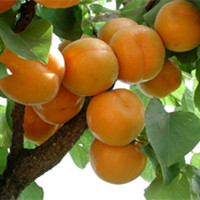
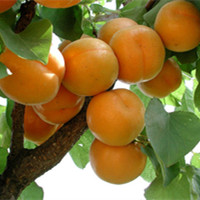
The fruit of the apricot tree is a drupe. When ripe, the skin is mostly yellow-orange and the flesh is soft and juicy. Besides being eaten fresh, it can also be processed into foods such as preserved apricots, dried apricots, and apricot jam. Apricot kernels fall into two types, sweet almonds and bitter almonds; sweet almonds can be eaten, while bitter almonds contain amygdalin and should not be eaten in large quantities without processing.
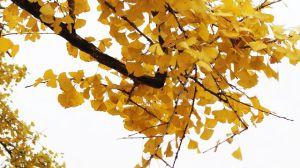
It should be noted that the apricot tree and the ginkgo tree are only similar in name and are not the same kind of plant. The apricot tree is an angiosperm and mainly bears fleshy fruit; ginkgo is a gymnosperm and bears hard-shelled white nuts (ginkgo nuts). The two differ noticeably in tree shape, leaves, and fruit form.
In routine management, common diseases of the apricot tree include apricot decline disease and gummosis, while pests include aphids and red spider mites. These can be prevented and controlled through reasonable pruning, orchard sanitation, and timely application of pesticides, keeping the tree vigorous and helping to ensure stable fruiting.