A Complete Introduction to the Characteristics and Care of Ixora
Ixora is an evergreen shrub of the genus Ixora in the family Rubiaceae, a typical woody plant, also known in some regions as Shandan flower or red hydrangea. It is native to tropical Asia and is fairly widely cultivated in South China and other areas; because of its long flowering period and brilliant flower colors, it is often used for courtyard landscaping and beautification.
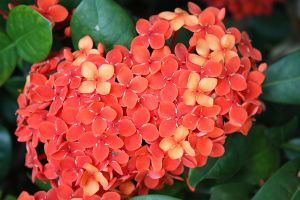
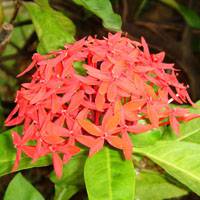
The leaves of Ixora are opposite, mostly elliptical, with a smooth and glossy surface. Although the flowers are small, they are dense in number, clustered into hemispherical inflorescences, and when in full bloom they look like colorful hydrangeas; red, orange, yellow and white varieties are common. In warm climates it can bloom almost all year round, with a very long ornamental period.
This plant prefers a warm, humid environment with plenty of sunlight. It tolerates heat fairly well but is afraid of cold, and growth slows noticeably at low winter temperatures. It is also a typically acid-loving plant, and yellowing leaves easily occur in alkaline soil, so a loose, fertile, acidic soil should be chosen when cultivating it.
For care, the soil should be kept moist but not waterlogged during the growing period of Ixora, and ample light favors abundant flowering. Pruning is generally done after flowering, which can encourage the plant to sprout new branches and keep the plant compact and full in shape. Propagation is mainly by cuttings, which is simple to do and has a high survival rate.
In routine management, attention should also be paid to common pests such as aphids and scale insects, as well as diseases such as leaf spot; timely treatment once discovered is enough to keep them under control. Whether planted in the ground for landscaping, used as a hedge, or grown in pots on a balcony or in a courtyard, Ixora is a very popular flowering shrub.