An Introduction to the Characteristics, Cultural Symbolism and Garden Applications of the Sorrowless Tree
The Sorrowless Tree (Saraca) is an evergreen tree of the genus Saraca in the legume family Fabaceae. People also commonly call it the Sorrowless Tree, and it is a typical woody plant. It is mainly distributed in tropical Asia, and is fairly common in the warm southern regions of China such as Yunnan, Guangxi and Guangdong. Its form is tall and upright, with dense branches and leaves, and its leaves are pinnately compound. The newly emerged young leaves are soft and drooping, gradually turning green later, which is quite ornamental in itself.
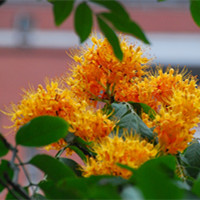
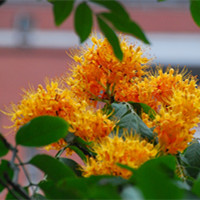
The most unusual feature of this tree is the way it flowers. The orange-red flowers grow in dense clusters directly on old branches and even on the trunk, and this phenomenon of cauliflory is rarely seen in the plant kingdom. The flowering period is mostly concentrated in spring, and when in full bloom the whole tree is a blaze of red, very striking from a distance. After the flowers fade, it also produces flat pods.
In traditional culture, the name of the Sorrowless Tree carries an auspicious meaning in itself. Legend has it that it has a deep connection with Buddhism, so it is often regarded as an auspicious tree symbolizing freedom from worry and freedom from affliction, and it is also planted in some temple courtyards.
As for cultivation, the Sorrowless Tree prefers a warm and humid climate and is not tolerant of severe cold, making it more suitable for planting in tropical and subtropical regions. It likes ample sunlight and deep, fertile, well-drained soil. In routine care, simply maintain the water supply, avoid waterlogging and low-temperature frost damage. In southern gardens, it is often used as a shade tree or street tree, and whether planted as a specimen or in rows, it can create a fine landscape effect.