An Introduction to the Characteristics and Home Care of Nerve Plants
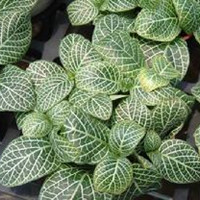
The nerve plant (Fittonia) is a perennial evergreen herbaceous plant in the Acanthaceae family, native to the tropical rainforest regions of South America. Its leaves are small with clearly defined veins; white or red net-like veins cover the leaf surface, looking like a fine mesh, which is how it got its name. As a small potted plant grown mainly for its foliage, the nerve plant is very popular among indoor greenery.
In terms of characteristics, the nerve plant is low-growing and compact, with opposite leaves that are mostly ovate or elliptical, and foliage colors mainly dark green or emerald green. Common cultivated types include the white-veined Fittonia with white veins and the red-veined Fittonia with red or pink veins; there are also different strains with large leaves and small leaves, and the thickness of the veins and the depth of color vary, offering a rich ornamental effect.
For care, the nerve plant prefers a warm, humid, semi-shaded environment and fears direct strong light, making it suitable for placement by a window with bright indirect light or indoors. Watering should follow the principle of keeping the potting soil moist, and waterlogging that causes root rot must be avoided; when the air is dry, mist the leaves and surrounding area to increase humidity. It is not cold-tolerant, so in winter keep it warm and reduce watering appropriately. Propagation is mostly done by cuttings or division, which are relatively easy.
The nerve plant has a small stature, making it suitable for decorating a desk or tabletop, and it is also often used in moss micro-landscapes and combined potted arrangements, and is often given the meaning of freshness and calm. In daily care, if the leaves are found to be soft and drooping, it is mostly related to lack of water, low temperature, or overly strong light; promptly adjusting the placement and watering rhythm will allow it to gradually recover.