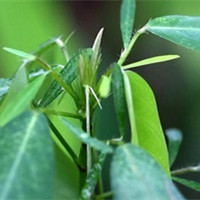
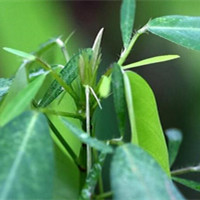
An introduction to why the dancing plant dances and its characteristics
The dancing plant is a small shrub of the genus Codariocalyx in the legume family, also known as dancing grass, lover's grass, and the grass that moves without wind, among other names. It is mainly distributed in South China, Southwest China, and parts of Southeast Asia. Its most interesting feature is that its leaves move on their own; even on a windless day, the small leaflets on both sides keep tracing arcs and rotating, looking as if they are dancing, which is how it got its name.
The key to why the dancing plant dances lies in the special pulvinus structure at the base of the leaves. The cells inside the pulvinus change their turgor pressure in response to external stimuli, driving the leaflets to repeatedly rise and droop. When the temperature is in a relatively warm range, and with additional stimuli such as sound and light, this movement becomes especially pronounced, and sound-wave vibration is often considered one of the most direct triggers.
As for the purpose of the dancing, most ideas so far are speculation. Some hold that the movement can drive away insects that land on it, reducing the chance of the leaves being eaten; others believe it can improve the leaves' light exposure and heat dissipation, helping the plant adapt to hot environments. The exact reason still needs more observation and research to confirm.
Cultivating the dancing plant is not difficult; it likes warmth and plenty of sunlight, is suited to loose, well-drained soil, and simply needs the potting soil kept slightly moist during the growing season. Because its leaf movement is so amusing, the dancing plant is often used as a garden accent or a balcony potted plant, making it a rather entertaining ornamental plant.