A Brief Introduction to the Plant Characteristics and Edible Value of Tianshan Yacon
Tianshan yacon is actually the tuberous root of the yacon plant, a member of the Asteraceae family. It originated in the Andean region of South America and was later introduced to Yunnan, Sichuan, and other parts of China for cultivation. Although its name contains the words "Tianshan snow lotus," it is not related to the snow lotus that truly grows at high altitudes in the Tianshan region; the name is a common misnomer formed through marketing under a borrowed name.
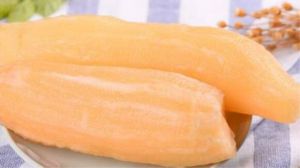
Its appearance closely resembles that of a sweet potato, with skin that is mostly reddish-brown or yellowish-brown. When peeled, the flesh is pale yellow, translucent, and juicy. The texture is crisp, sweet, and refreshing, falling somewhere between a pear and a water chestnut. After washing and peeling, it can be eaten directly as a fruit, and it can also be used in cold dishes, soups, or stir-fries. The tuberous root is relatively rich in oligofructose, with a clean, refreshing sweetness, but eating too much at once can easily cause bloating, so people with a weak or cold digestive system should eat it in moderation.
In terms of cultivation, yacon prefers a cool and humid climate and does well in deep, loose soil with good drainage. It is generally propagated in spring using seed tubers or sprouts, and the tuberous roots can be harvested in late autumn after the aboveground parts wither. During the growing period, moisture levels should be kept balanced, and drainage should be attended to during the rainy season to prevent waterlogging. When the plants grow tall, hilling soil around them appropriately can help reduce lodging.
Because of the similar name, Tianshan yacon is often mistaken for being related to the Asteraceae snow lotus or the Crassulaceae succulent known as snow lotus, but in fact the three are completely different plants. When purchasing, simply identify it by the form of its tuberous root to distinguish them. Its flesh is crisp, and its flavor is distinctive. It is both a popular seasonal fresh fruit and a suitable ingredient for everyday home cooking, and its edible value is recognized by many consumers.