An Introduction to the Characteristics and Cultivation Care Methods of Hollyhock
Hollyhock (Alcea rosea) is a perennial herbaceous plant of the genus Alcea in the mallow family (Malvaceae). It originated in China and was named for being widely cultivated in the Sichuan region in early times; it is also often called yizhanghong or Dragon Boat Festival flower. The plant grows upright and tall, reaching a height of one to two meters, and is a very common ornamental flower in courtyards and along roadsides.
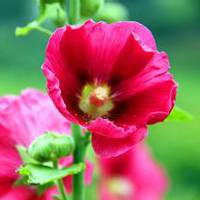
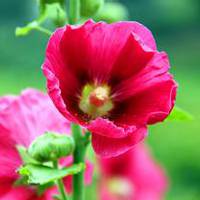
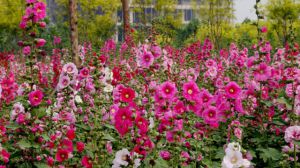
The flowers of hollyhock are large and striking, opening in succession from the bottom of the stem upward. The flower colors are rich and varied, including red, pink, purple, white, yellow and many other colors, and the petals come in both single and double forms. The leaves are nearly round, with a rough, hairy surface, and the flowering period is mostly in summer; the overall ornamental effect is lively and spectacular.
In terms of care, hollyhock prefers a sunny environment and has strong cold tolerance. It is not demanding about soil, but grows better in fertile, well-drained soil. During the growing season, keep the soil moist but avoid waterlogging; promptly remove spent flowers and dead branches after flowering to help reduce nutrient consumption and benefit flowering the following year. Propagation is mainly by sowing, which can be done in both spring and autumn.
In application, hollyhock is often used for greening and beautifying courtyard walls, beside fences, or along both sides of roads, and when planted in masses the flower border effect is especially striking. It resembles the mallow (Malva) in appearance and belongs to the same plant family, Malvaceae, but hollyhock is taller and its flowers are larger and more densely arranged, while mallow is relatively shorter; with careful observation, it is not difficult to tell them apart.