Cherry Tomato Varieties: Taste and Selection Tips for Shengnu, Yunu, and Chengmixiang
Taiwan, China has a wide variety of cherry tomato varieties, and every winter many different cherry tomatoes appear. Among them, Chengmixiang tomato is one of them. When we select tomatoes, how do we distinguish these different cherry tomato varieties?
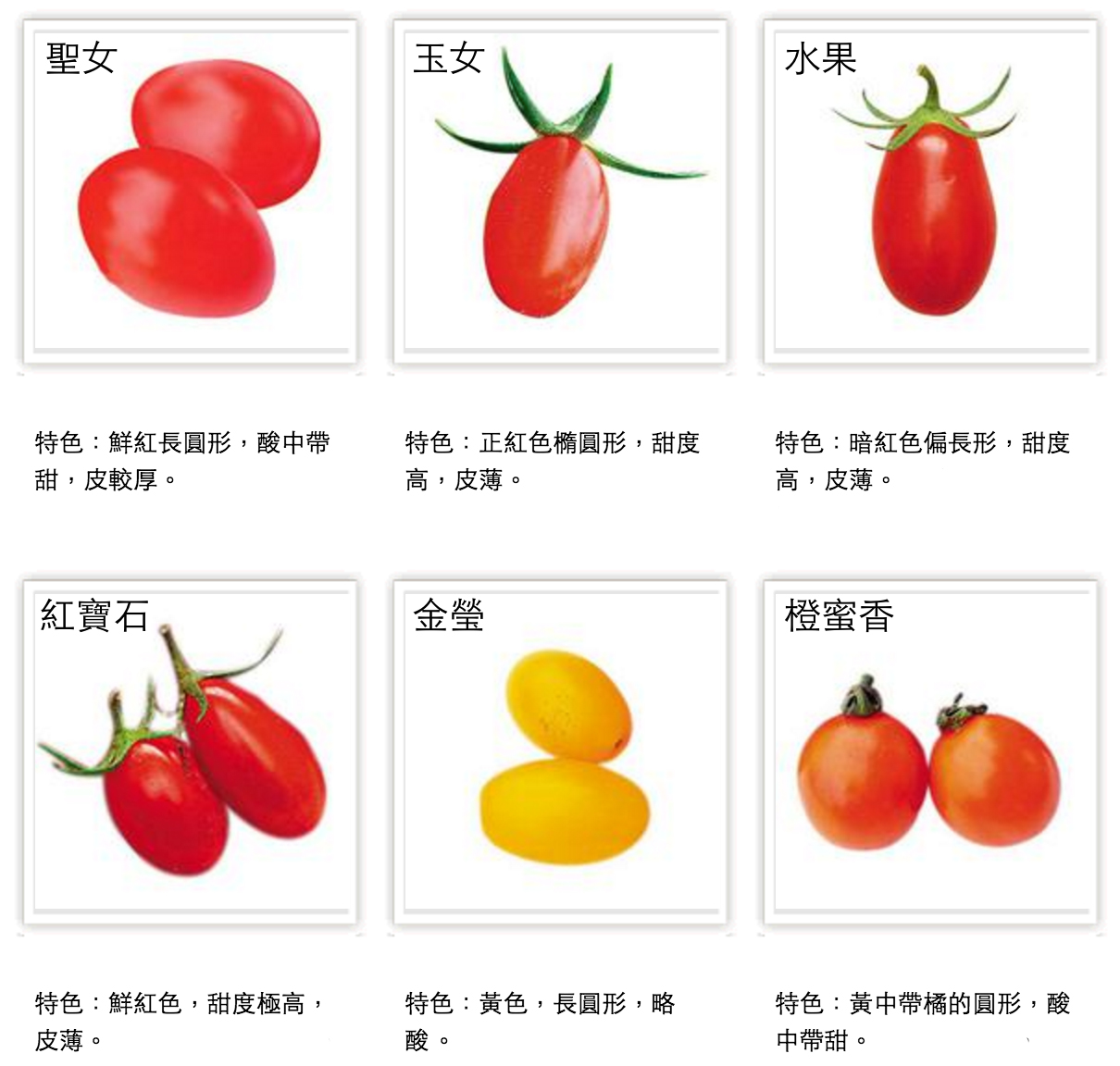
According to a report in the Liberty Times Weekend Life edition, the cherry tomato varieties on the market can be roughly divided into the following six types: Shengnu, Yunu, Fruit, Ruby (also called Hongguniang), Jinying, and Chengmixiang. (Note 1)
Those widely loved by everyone, and more commonly heard of, are Shengnu tomato, Yunu tomato, and Chengmixiang.
Shengnu tomato: bright red and oblong, sweet with a tart note, and with a thicker skin.
Yunu tomato: thin skin and fine flesh, sweeter than Shengnu, with sweetness reaching 13 degrees.
Chengmixiang: the fruit is orange and tastes fresh and fragrant.
Selection Tips
Cherry tomatoes are mainly plump-round or oblong in fruit shape, and for color, bright red is best; the redder they are, the more lycopene they contain, while for golden-yellow ones, the yellower they are, the more they contain. Also, tomatoes must have seeds; if cut open and there are no seeds, pay attention to possible pesticide use. There is also a test method: put cherry tomatoes bought and brought home into water, and tomatoes that sink indicate higher sugar content.
How do you grow sweet cherry tomatoes?
Cherry tomatoes are grown by grafting, mainly grafted onto eggplant, because both belong to the Solanaceae family and are very suitable for each other; among Solanaceae crops, tomatoes have deeper-growing roots, reaching 120∼150 cm. The ideal soil is deep, well-drained sandy soil. The common method is mainly net-house cultivation. The advantage of net-house cultivation is that the fruit can be harvested and marketed only after it has fully ripened red, so the fruit's sugar content is naturally 1∼2 degrees higher than that of open-field cultivation.