Characteristics, Classification and Common Varieties of Aquatic Plants
Aquatic generally refers to aquatic plants, meaning plant groups that live in water during a certain stage or throughout their entire life cycle. They have long adapted to waterlogged environments, with stems and leaves that are mostly soft and hollow and well-developed aerenchyma, allowing them to root, grow and reproduce normally in water or at the water's edge.
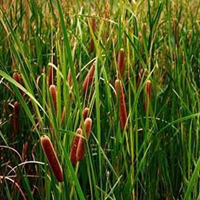
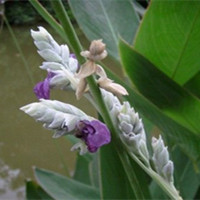
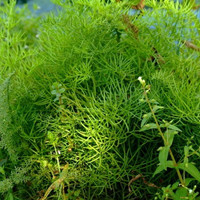
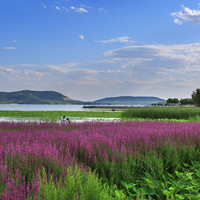
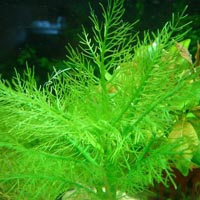
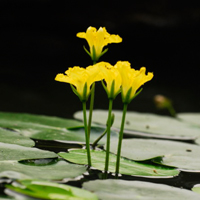
Divided by life form, aquatic plants can usually be grouped into several major categories: emergent plants, floating-leaved plants, free-floating plants and submerged plants. Emergent plants such as sweet flag (Acorus calamus), powdery thalia (Thalia dealbata) and purple loosestrife (Lythrum salicaria) have roots anchored in the mud while their stems and leaves rise above the water surface; the leaves of floating-leaved and free-floating plants lie flat on or float suspended at the water surface; submerged plants are entirely submerged in the water, and ornamental water plants such as water wisteria (Hygrophila difformis) are often used in aquarium aquascaping.
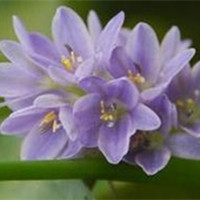
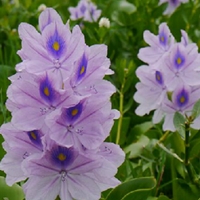
The uses of aquatic plants are highly diverse. In gardens, they enrich the layers of the water surface and create a natural, wild charm, and flowering species such as the water hyacinth relative Monochoria korsakowii also offer good ornamental value; ecologically, many aquatic plants can absorb excess nutrients in the water and adsorb suspended matter, and are often used for purification and ecological restoration of pond and wetland water bodies.
When planting and maintaining them, water depth, light and substrate conditions need to be controlled according to the characteristics of each variety, and dead branches and leaves should be cleaned up regularly to prevent the plants from spreading excessively and clogging the water surface. When making selections, the size and depth of the water body should be taken into account and different types of aquatic plants reasonably combined to form a stable and attractive aquatic landscape.