Characteristics of the Medicinal Effects of Pinellia pedatisecta and How It Differs from Pinellia ternata
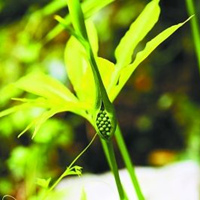
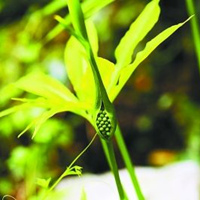
Pinellia pedatisecta is a perennial herb of the genus Pinellia in the Araceae family. It gets its common Chinese name, shui ban xia, because it often grows in waterside wetlands and its tubers resemble those of Pinellia ternata. In some places it is also called hastate-leaved Typhonium or tu ban xia. Its underground tubers are mostly nearly spherical or oval, and its leaves are simple, shaped like arrowheads or halberds, clearly different from the three-leaflet compound leaves of Pinellia ternata. This is also the most intuitive way to tell the two plants apart.
Pinellia pedatisecta prefers a warm, humid environment. It is commonly found beside paddy fields, along ditches and in marshy wetlands, and is distributed across several provinces in southern China, where it is also cultivated artificially. Compared with Pinellia ternata, which grows on dry land, it is better adapted to wet conditions, which is exactly why the word for water appears in its name.
Medicinally, the tubers of Pinellia pedatisecta can be processed for use in medicine. Traditionally it is believed to have the effect of drying dampness and resolving phlegm, and it is often used as a local substitute for Pinellia ternata. However, the two are not the same plant, and there are differences in their effects and methods of use. Specific use should follow the guidance of a doctor or professional.
It should be especially noted that the whole plant of Pinellia pedatisecta is toxic, and the raw tubers are quite irritating. Accidental ingestion may cause discomfort in the mouth and throat, so never dig it up and take it on your own. Before it is used as medicine it must undergo standard processing, so that its medicinal effects can be brought into play while reducing toxicity and ensuring safe use.