A Detailed Introduction to the Characteristics and Care Methods of Michelia maudiae
Michelia maudiae is an evergreen tree of the genus Michelia in the family Magnoliaceae, and is relatively common in the mountainous areas of southern China, with natural distributions in Zhejiang, Fujian, Hunan, Guangxi, Guizhou and other places. Because its leaves are smooth and its flowers are pure white, it is also called glossy-leaved white magnolia or Mo's Michelia. Mature plants have a tall, upright tree form, making it a relatively rare tree type within the genus Michelia, with outstanding ornamental value.
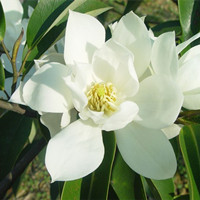
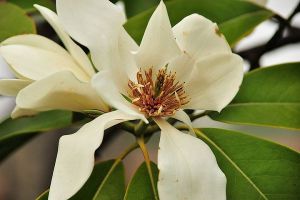
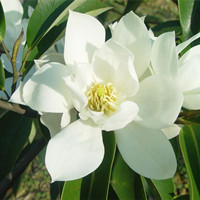
The most attractive feature of Michelia maudiae is its flowers. Every year in early spring, the flowers open before or together with the new leaves, and the tepals are as white as jade with a delicate fragrance that can be smelled from far away. The leaves are leathery and glossy, dark green on the upper surface and slightly white-powdered on the underside, remaining evergreen all year round, so they still look good even when the plant is not in bloom. Young trees are somewhat shade-tolerant, while mature trees prefer light, and its adaptability is relatively strong among Magnoliaceae plants.
In terms of care, Michelia maudiae likes a warm and humid climate and is suitable for planting in deep, well-drained, slightly acidic soil. It is afraid of waterlogging, and excessive watering or poor drainage after rain can easily cause root rot, shown by yellowing and falling leaves and gradually weakening growth. If root rot is found, water should be controlled and the soil loosened in time; in severe cases, the plant needs to be removed from the pot, the rotten roots pruned away, and after disinfection the soil replaced and the plant replanted.
In landscaping, Michelia maudiae is often used as a street tree, shade tree or courtyard ornamental tree, and the landscape effect is especially beautiful when it blooms in early spring. Its wood is of fairly good quality and can also be used for furniture and joinery and other purposes. Propagation is mainly by sowing; seeds are collected in autumn, treated and then sown, and during the seedling stage it is enough to provide shade and maintain moisture.